Home & Living
Coaster accent styling: repeat one detail across a table
An original table-composition exercise compares repeated accents and deliberate contrasts, keeping visual preferences separate from coaster fit, care and protection claims.
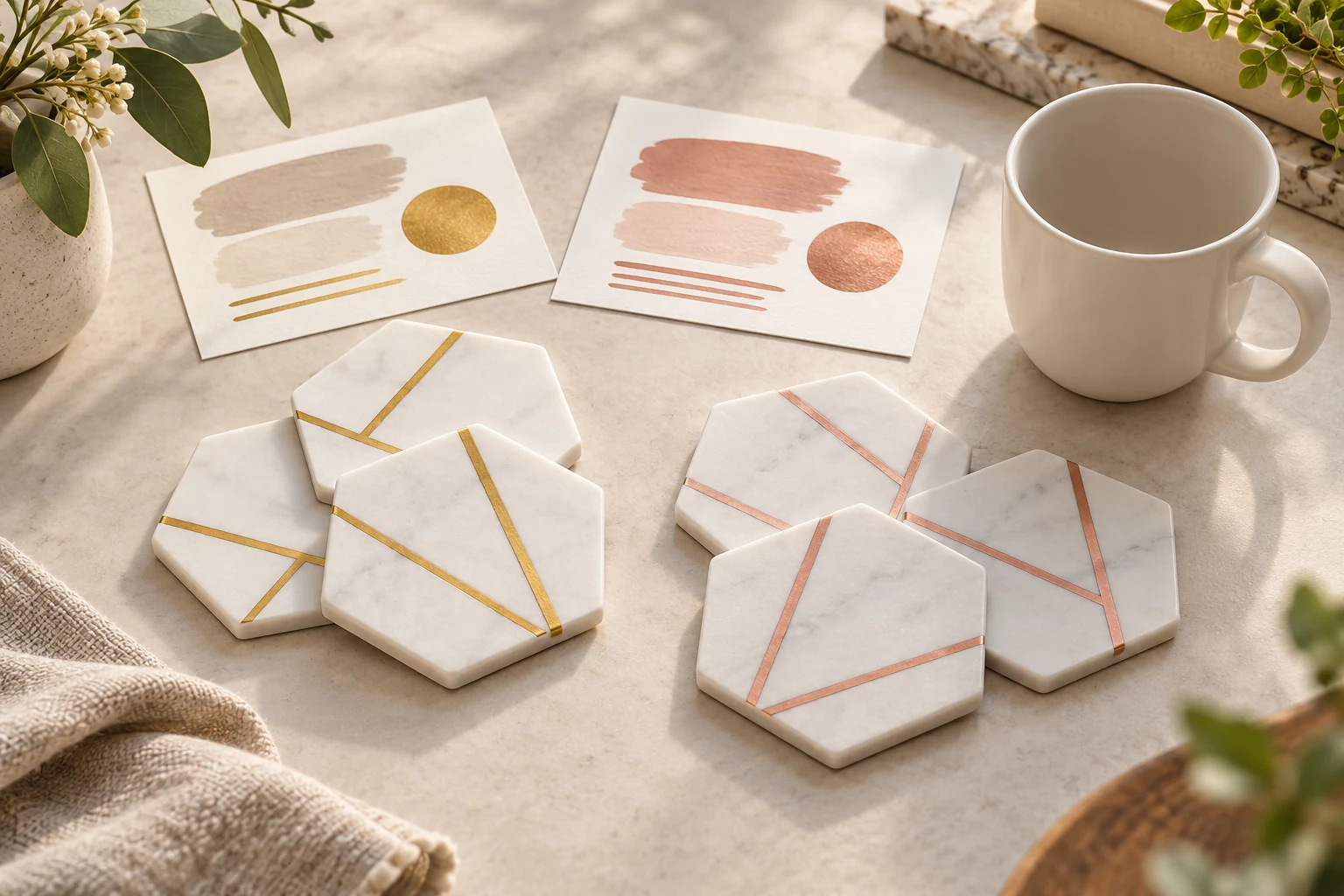
Coaster accent styling can begin with one detail already on your table. You might enjoy a warm stripe on a cup, a pale cloth or the outline of a small dish. Choose the feature you would like to repeat, then compare a deliberate contrast. This is a personal composition exercise, without a rule that every object must belong to a matching set.
The proposals below are original styling ideas on paper. They report no physical trial of the two coaster offers and promise no response from guests. Appearance does not establish drink stability, scratch prevention, moisture protection or suitability for a furniture finish. Keep those practical requirements separate before placing any new object on an actual table.
Begin with something you already want to keep
Look at the objects you intend to use together and choose one detail you enjoy. It might be a colour, an outline or a small repeated mark. Name the detail in ordinary words. “The warm edge on this plate” gives your proposal a starting point without requiring a complete decorating scheme or a purchase to replace everything around it.
Keep the chosen object identifiable in your planning note. If several cups have different rims, say which cup you mean. A general description such as white tableware can hide the small feature that interested you. The exercise works from your actual preference, so leave yourself enough information to recognize that preference when you return to the proposal later.
Choose a limited setting for the idea. A small coffee-table arrangement and a full dining table need not carry the same visual emphasis. You can consider one place within the room without declaring a new style for the whole home. Keep the objects you mean to retain in the proposal rather than starting with a catalogue scene whose contents you do not own.
Read the two coaster examples as exact offers
The LuKa Marble Designs gold-accent offer describes four hexagonal Carrara marble coasters with gold accents and grey veining. Its whole gallery shows white hexagonal forms with a broad gold-toned area, including a four-piece stack. Those are attributed source details and visible styling references, without independent material authentication or a promise that their actual colour matches something in your room.
The LuKa Marble Designs rose-gold offer describes four hexagonal Carrara marble coasters with painted rose-gold accents. Its whole gallery shows a narrower band across the white forms, four-piece arrangements and styled glassware. The pictured glass and plant are scenery, not supplied inventory. This article adopts no scratch, stain, slip or spill-protection result from the offer's backing claims.
The shared hexagonal form makes the accent a useful visual question, while the broad area and narrow band offer different details to notice. You can prefer either appearance without ranking the products' performance. A photograph also leaves the real appearance under your own conditions unconfirmed. Keep the exact product reference when asking about a particular finish instead of treating every gold or rose-gold listing as identical.
Compare one repeated accent with one contrast
Make a simple paper proposal that retains the existing object you chose. Add an approximate shape for the proposed coaster and indicate which detail you would like it to echo. This is a sketch of an idea, not a measured product drawing or a placement instruction. It does not establish the usable surface, backing requirements or fit beneath a real vessel.
On another proposal, keep the same existing objects but choose a different accent. You might prefer a warm band against something plain, or a pale area beside a busier pattern. Describe what you enjoy about that relationship. A contrast can be intentional even when it does not repeat a colour already present. You do not need to label it a mistake merely because the pieces differ.
Read the two proposals as alternatives rather than combining all their objects at once. If each drawing contains different cups, cloths and decorations, you may be comparing several changes together. Hold the familiar items steady while considering the accent itself. Once you know which part interests you, you can decide whether another change deserves a separate proposal.
Let an imagined table explain the choice
Imagine a small table with a plain white cup, a card with a muted warm detail and a plate whose edge the owner likes. These are fictional objects in an original scene, not a report about a tested room. One proposal repeats the plate's warm edge in a broad accent. Another follows the card's quieter detail through a narrow band.
The owner can ask which connection they would like to notice first. They might enjoy the stronger accent beside the plain cup, or prefer the smaller band while leaving the plate as the most noticeable detail. Those are personal responses within the invented composition. Neither establishes how another person will look at the table or which retail finish will match the imagined colours.
Now remove the card from both paper proposals. The plate and cup remain, but the reason for the second accent may feel different to the owner. They can retain that contrast because they still enjoy it or return to the repeated edge. The exercise has changed one part of the proposed arrangement, without claiming that an actual product performed differently.
Leave some of the table visually quiet
A small accent does not require another object to accompany every occurrence. You can leave areas of the drawing plain and compare how that looks to you. If you find yourself adding a new item only to explain the previous addition, return to the first detail you wanted to keep. The original preference can remain enough for a small composition.
Keep the table's ordinary purpose visible in the proposal. The arrangement may need to coexist with the things people actually use there. This article supplies no universal spacing, reach distance or circulation measurement. An attractive drawing leaves practical placement unanswered. Preserve those questions rather than treating the empty area on paper as proof that every object will work in the real setting.
Consider the proposed composition from the position you intend to enjoy it, using a sketch or another appropriate representation. A detail that interests you in a close view may be a smaller part of the whole arrangement. Describe that difference as your response to this proposal. It does not establish a standard viewing distance or a measured visual effect for either coaster.
Choose which difference is worth keeping
Return to the same two proposals after a pause if you want to. You may still prefer one, or discover that the existing arrangement is enough without adding anything. A styling exercise can end without an order. Keep the alternative you liked as a reference rather than making the purchase necessary merely because you spent time drawing it.
If someone else shares the table, ask which detail they enjoy and what they want to retain. They may care more about another existing object than the one you selected. You can make another proposal with that preference visible. The conversation need not produce a universal winning palette; it concerns the arrangement the people involved actually want to live with.
Keep a changed preference separate from a product defect. Deciding that a band no longer suits your proposed composition says something about your choice, not about the quality of the offered object. Likewise, a preferred appearance does not confirm construction, supplied quantity or material origin. Retain those as their own product questions when they matter to a possible purchase.
Keep backing and storage decisions separate from appearance
The coaster-backing enquiry guide distinguishes an included layer from one already attached and from a proposed extra accessory. That is a separate contents question. A colour preference supplies no reason to add a pad or change a backing. The actual furniture requirements and applicable product information remain necessary before using a selected coaster on a real surface.
The four-piece coaster return guide considers drink positions and the place where a set returns between uses. Its holder arrangements do not establish a holder in either LuKa offer. Here, you are choosing a visual relationship. A repeated accent will not by itself create a practical collection route or keep every coaster accounted for after a gathering.
Retain the preferred idea with its real limits
Give the proposal a short description you understand, such as repeat the plate edge or keep a narrow contrasting band. Retain the exact offer if it remains under consideration. An internet image can inspire the idea while leaving real colour, material, care and supplied contents open to confirmation. Do not replace those questions with a screenshot that merely resembles the drawing.
If the actual item later differs from the appearance you expected, describe the difference through the supplier's appropriate enquiry process. This article supplies no return entitlement, cleaning process or method for repainting an accent. Keep a personal styling decision separate from an order-resolution question. You can reconsider the composition while leaving an uncertain product detail honestly unresolved.
Keep payment tied to the exact selected offer
Both captured product offers list cryptocurrency among accepted payment methods in structured data. That supports checking the current checkout if you choose to purchase. It does not establish which assets, networks or wallet services a later transaction will support. Payment availability also cannot confirm an exact colour match, establish material origin or prove that a coaster will protect the finish of your table.
Before payment, retain the exact offer, selected option and stated supplied contents. Keep any written answer about the finish or another unresolved detail with that order reference. A different accent or substituted set needs its own review. If someone else orders for the shared table, give them the selection actually agreed rather than asking them to infer it from a general description of the preferred palette.
If cryptocurrency is chosen, read the amount, asset and network instructions presented for that transaction. Confirm receiving details in the actual payment flow. This article gives no wallet address, transfer procedure, fee estimate, exchange rate or network recommendation. Ask the merchant or payment provider about a missing essential detail. Save the dated instructions so a later enquiry can identify the same order and attempt.
Check merchant order status as well as payment confirmation. Reconcile an uncertain existing attempt before sending another payment. Read current cancellation, return and refund conditions for the selected order, including cryptocurrency terms where relevant. Retain confirmation and payment reference together. An acknowledged payment does not confirm delivered appearance, and a preferred sketch is not evidence that a material or backing suits the actual furniture.
Coaster accent styling can finish with one relationship you would like to keep: a repeated edge, a narrow contrast or a quieter arrangement using what you already have. Let that choice remain personal. Carry the preferred idea forward with the product and surface questions still identifiable, rather than asking a small decorative accent to prove anything about performance.