Lighting
clamp desk lamp slipping: check the desk edge and arm position
Observe the clamp base, measure the desk edge and arm position, and use the exact maker guidance before trusting a moving lamp.
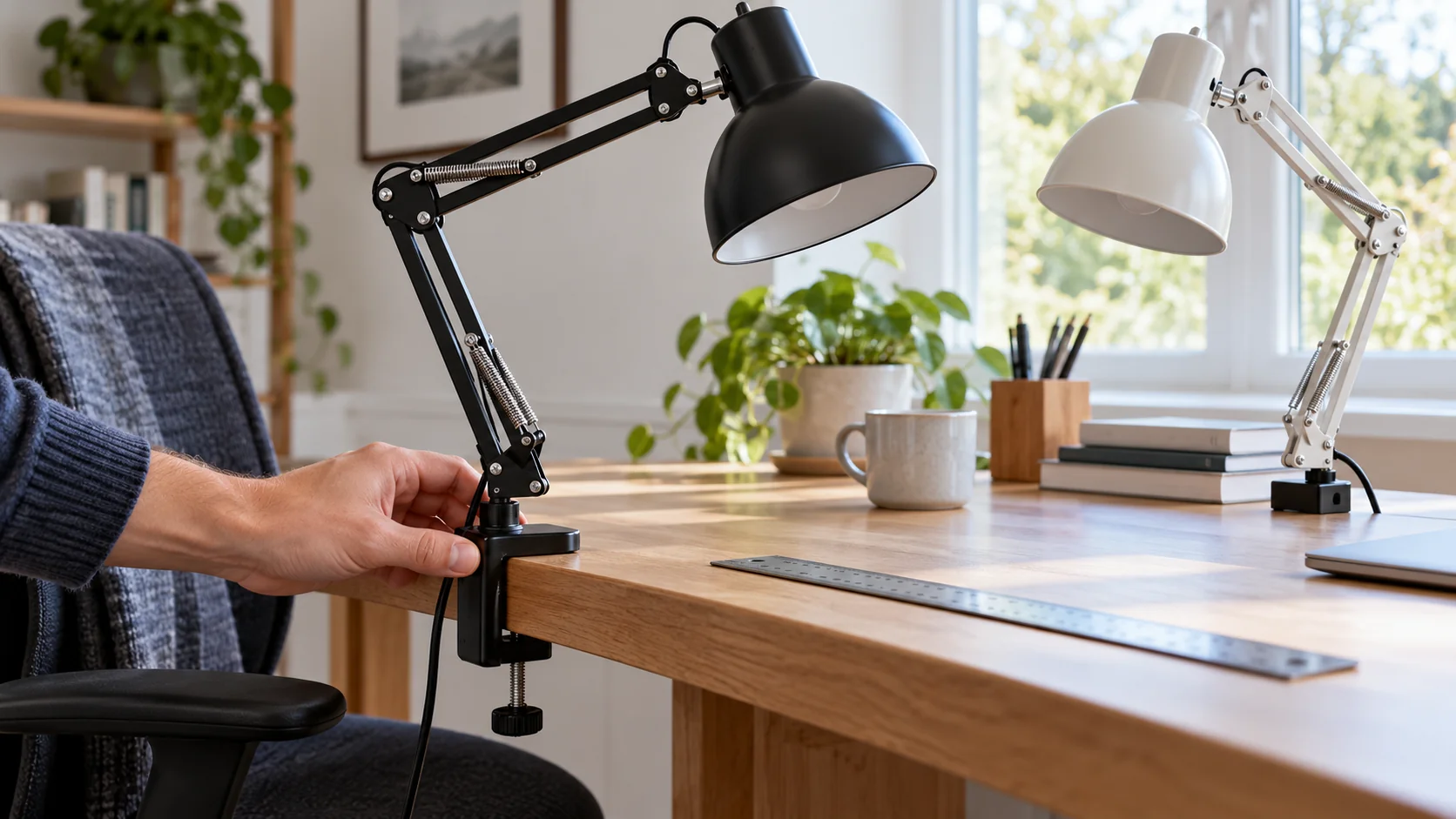
A desk lamp that moves whenever you adjust its arm can make the work area frustrating. Before blaming the shade or tightening anything, watch which part actually shifts. Clamp desk lamp slipping means the base changes position against the desk edge; a head that droops while the base stays fixed is a different problem. This guide stays with external observations, desk-edge fit, and product-specific placement guidance. It does not ask you to open a lamp, repair wiring, drill a desk, or invent a new way to hold a failing clamp in place.
Two captured listings show the range of clamp-mounted desk lamps without proving fit for your edge. The XL architect task lamp describes an adjustable arm and clamp mount. The Great Sun desk lamp describes a clamp base and movable arm. Neither description used here establishes a universal safe desk-edge thickness or tells you how to repair a damaged clamp. The right next step depends on what moves, where the clamp contacts the desk, and the exact model's instructions.
Find the point that moves
Turn the lamp off and let it cool if it has been in use. Watch the base while you gently move the arm through the range you normally use. Does the clamp slide along the desk edge, rotate around a corner, or lift away from the surface? Or does the base stay fixed while the shade sinks? Make one observation at a time. A brief note or video can help when you need to describe the symptom to a seller or repair professional.
If the base slips only when the arm reaches far across the desk, note that position. The arm changes how force reaches the clamp, even when you have not touched the base. Return the lamp to a position supported by its instructions rather than forcing the clamp harder against the edge. Do not leave it extended over a place where a fall could strike someone or damage another item. A lamp that cannot remain stable in its intended position should not be treated as ready for ordinary use.
Check whether the desk itself moves. A light table, loose shelf, or flexible edge can make an apparently tight clamp seem unstable. Observe the surface with the lamp off and no person pushing on it. If the entire desk shifts, address that furnishing under its own instructions before concluding that a lamp part failed. Do not compensate for furniture movement by over-tightening a clamp or placing a heavy object on the lamp arm.
The desk-lamp shade-aim guide covers a head or shade that will not hold its direction. Use that guide when the clamp base remains secure and the problem is above it. Here the decision is whether the clamp's contact with the desk edge can support the lamp in a maker-approved position. Keeping the two symptoms separate prevents a base problem from turning into an unrelated adjustment to the shade.
Record the exact lamp model and the desk or shelf edge you are using. Take photographs from the side and below that show the contact surfaces without disassembling anything. A product title may have several variants, and a desk edge may be thicker or more rounded than it looks from above. The record gives a seller or maker a concrete fit question. Include the position where the slip occurred, but do not repeat a movement that makes the lamp likely to fall.
Inspect the desk edge and contact
Measure the edge where the clamp sits, including any apron, lip, molding, or layered top. A flat, accessible edge is different from a beveled or rounded one. Compare the actual measurement with the range specified for your exact lamp, if the maker supplies one. The XL listing describes a clamp and adjustable arm, and the Great Sun listing describes a clamp base, but neither captured description supplies a verified universal range for this desk. Ask the maker rather than inferring fit from a product photograph.
Look at where the upper and lower contact points meet the desk. Are they both against firm, usable surfaces, or is one touching a curved lip, a thin decorative trim, or an empty space beneath the top? The goal is to identify the contact pattern, not to modify it. If the desk has a finish that might be marked, follow its care instructions and the lamp maker's mounting guidance. Do not add improvised pads, wedges, tape, or adhesive to hide an unresolved mismatch.
Notice nearby cables and objects. A cord snagged during arm movement can tug the base even when the clamp appears fitted. Clear the intended movement path without altering the electrical cable, and make sure a drawer or chair does not strike the clamp from below. If moving the lamp to a cleaner location is allowed by the maker, test that location while the lamp is off. Keep liquids away from the lamp and plug during this check.
Examine the visible clamp for a missing contact piece, deformation, or a screw that no longer moves as the instructions describe. Do not dismantle the mechanism to diagnose it. If you find damage, stop using the mount and ask the maker or seller for the correct replacement or service route. Tightening harder is not a substitute for intact parts. The product page may describe a clamp base, but it cannot establish the condition of the particular unit on your desk.
Use the maker's exact placement instructions as the boundary for any adjustment. If the manual provides a supported edge range or mounting orientation, compare it with the desk you measured. If those details are missing, ask a specific question with photographs and dimensions. “Will this clamp hold on a rounded 30-millimeter edge with an apron?” is more useful than “will it fit any desk?” Wait for product-specific guidance before relying on the mount.
Do not relocate the clamp to a glass shelf, hollow panel, or delicate trim merely because the shape looks convenient. The strength and care requirements of that surface are separate facts. Likewise, an arm that can reach a position does not mean the mount can remain stable there. The safe working location must be supported by both the actual furniture and the lamp's instructions. If you cannot establish that support, use another suitable location or a different lighting arrangement.
Test an approved position
Once the edge and mount match the exact maker guidance, place the lamp in its normal position with the power off. Follow the manual's clamp-setting method without adding force beyond what it specifies. Check that both contact points meet the desk as intended, then gently move the arm only through the range the maker permits. Watch the base rather than the light beam. A small visible shift under gentle movement is still a reason to stop and reconsider the mounting spot.
Compare the two candidate descriptions carefully. The XL page emphasizes an adjustable arm and clamp. The Great Sun page mentions a clamp base along with several moving sections of the lamp. Those features explain why the base position matters when the arm is used, but they do not prove which cabinet, table, or desk edge either model accepts. Match an actual product to its own manual; do not apply one maker's placement direction to another lamp.
The desk-lamp no-light guide handles a lamp that fails to illuminate. It is a separate diagnostic path. A stable clamp cannot fix a power failure, and a working bulb does not prove that a loose base is acceptable. If both symptoms occur, stop using the lamp and address each under the appropriate instructions. This article does not direct electrical testing, cord work, or replacement of light-source components.
If the base holds in one approved position but slips when you move the arm elsewhere, record both positions. The difference may reveal a placement limit or a desk-edge mismatch that needs maker guidance. Avoid a repeated “test” that keeps bringing the lamp close to falling. A practical result is to use only a confirmed stable configuration or to stop using that mount. Do not turn a narrow successful test into a claim that every arm position is safe.
If the lamp slips even without arm movement, remove it from the edge following its manual and keep it in a safe place while you investigate. Check the saved photographs and the actual edge measurements, then contact the maker or seller with the model and symptom. Ask which approved surfaces and parts apply to your unit. A damaged clamp or unsuitable desk edge calls for a product-specific solution, not an improvised grip.
Decide whether to keep the mount
Keep the mounting arrangement only when the exact lamp instructions support the surface and the base remains stable during its intended use. A successful outcome is observable: the clamp does not creep, lift, or twist while the arm moves within its approved range. Check it again after ordinary use, since a setup that looked fine during installation can reveal a contact problem later. Stop if the base begins to move.
Move the lamp to another maker-approved position if the current edge is rounded, obstructed, or outside the confirmed fit range. Measure the new location just as carefully; a different part of the same desk may have a different thickness or underside. Do not assume a nearby shelf is stronger or suitable simply because the clamp opens around it. Preserve the desk finish and follow both the lamp and furniture guidance.
Choose another lighting approach if no suitable mounting surface is available. A freestanding lamp or a different clamp design may fit the workspace better, but this guide cannot select one without the exact desk and product specifications. Save the measurement and the failure description so the next purchase does not repeat the same mismatch. Treat unverified seller claims about comfort or brightness separately from the mounting decision.
Keep a short record of the lamp model, desk-edge dimensions, visible contact pattern, position of the arm when movement occurred, and any maker response. Clamp desk lamp slipping is resolved only when the actual base stays where it belongs in a supported configuration. If the evidence remains uncertain or the clamp appears damaged, leave it off that edge and let the maker or a qualified repair professional determine the next step. Keep photographs of the stable and unstable positions with that record.