Home & Living
Christmas tree skirt storage: clear, inspect, and fold after the holiday
Clear and inspect a tree skirt after the holiday, follow the actual care label, then fold it with a truthful condition note for next season.
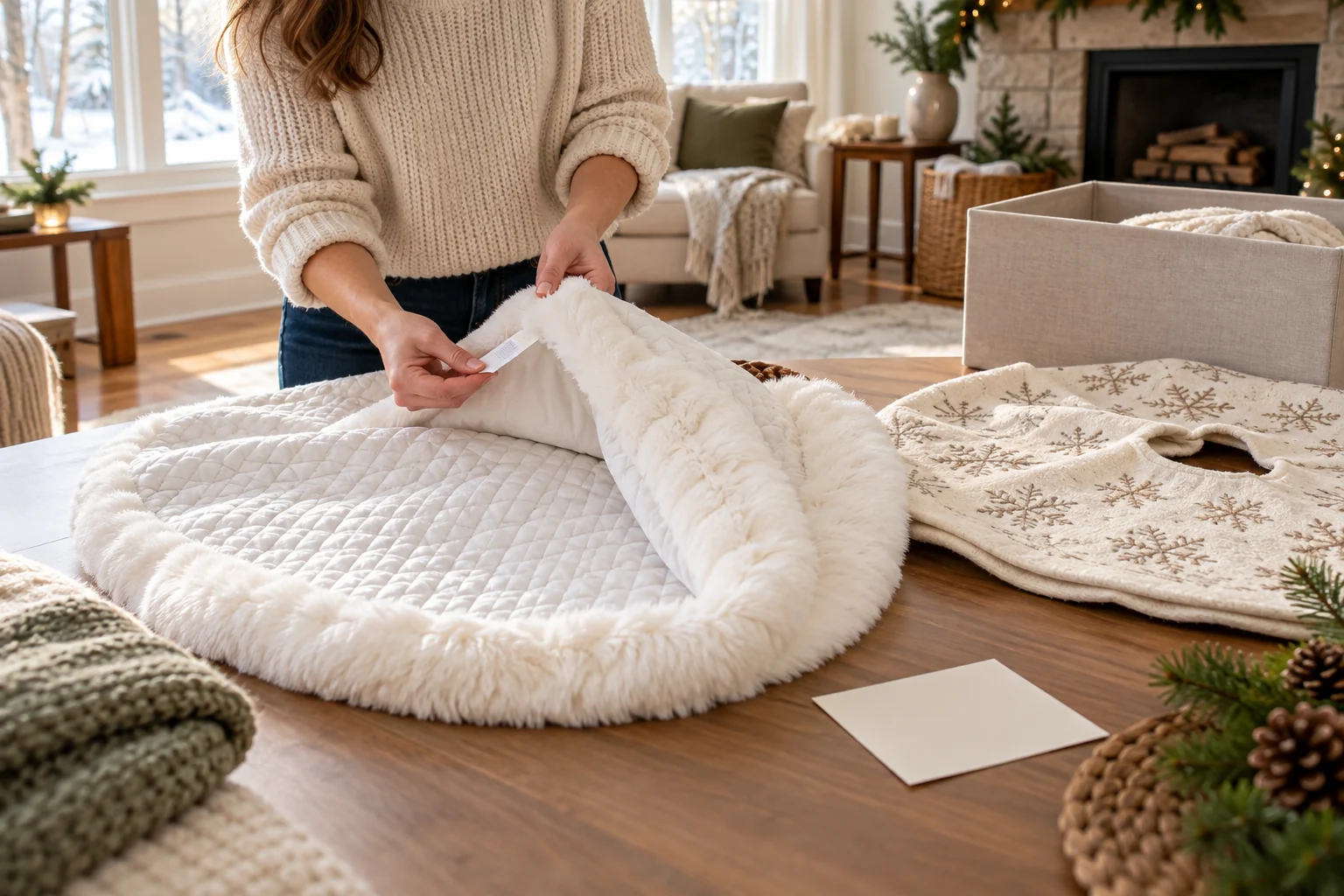
Christmas tree skirt storage begins when the tree base is clear enough to reach the fabric without dragging it past a stand, branch, or stack of gifts. A skirt may look ready to fold while still holding fallen needles, a loose ornament hook, or a damp spot. Give it a separate end-of-season check before placing it in a box. Keep a clean work surface nearby and decide where the skirt can rest while you examine the border, center opening, backing, and any care information attached to it. The goal is to remember the actual condition next year, not to invent a cleaning method from a product photograph.
Two live tree-skirt offers show different details a shopper can know from a listing. The LJFMDLN 48.4-inch tree skirt with hemp-flower decoration is described as a decorative skirt placed around a tree. Its source gives an approximate size and suggested settings, but no usable wash or dry instruction. The LJFMDLN quilted tree skirt with faux-fur border is described as reusable fabric in 36- and 50-inch options; its listing says it folds for storage and can catch fallen needles or leaves. Neither listing replaces the care label on the exact item in hand.
Clear the base before moving the skirt
Remove the objects resting on the skirt first. Set aside gifts that remain, small decorations that have fallen, and anything that could snag the fabric when lifted. If the tree is still in place, wait until the safe route around its stand is open. Do not pull the skirt out by one edge under a loaded tree. Once the stand area is accessible, identify the skirt's opening or fastening and release it gently. The exact fastening depends on the actual item, so inspect rather than assume ties or hook-and-loop strips from a generic photo.
Look across the surface before folding. A real tree may shed needles; a room may leave dust or wrapping fragments. Pick up any sharp object by hand before it can be trapped against the fabric. If you find a wet patch or sap-like residue, keep that place visible for a separate care decision. This guide does not prescribe a solvent, machine cycle, or heat setting. Those choices depend on the actual fiber, trim, backing, and care instructions.
Move the skirt to a clean, open surface. A table or cleared floor can give enough room to see the border and center opening at once. Keep the decorative face upward for the initial inspection. This is a condition check, not a new diameter test. If you are choosing a skirt before the holiday, the tree-skirt diameter and floor-circle guide owns that earlier measuring decision.
Take a moment to see how the opening closes around the stand. After a season of use, a tie, seam, or edge can be pulled out of place. Make a short note if something needs repair before next year. Do not hide a loose thread under a tight fold and expect to notice it in December. If repair would require sewing through decorated trim or an unfamiliar backing, leave it for someone with the right materials rather than making a hurried fix during cleanup.
Read the actual care label before cleaning
A product page can describe a skirt as reusable or suitable for several settings and still leave cleaning unspecified. The two current listings do not establish a safe washing procedure for their exact fabrics and decorative features. Check the tag attached to the skirt you own. If it gives a cleaning method, follow that instruction for the actual item. If the label is absent or unclear, avoid guessing a machine cycle, detergent, or drying temperature. Seek reliable product-specific guidance before treating a visible stain.
Separate loose debris from a stain. A needle lying on top can often be lifted without changing the fabric. A mark that has entered the material is a different problem. Do not scrub embroidery, sequins, faux fur, or an unknown surface as if all of them were plain cotton. Test only what the item's care information supports. The listing for the quilted option names embroidery and a faux-fur border; those details are reasons to read its own care label closely, not a complete care recipe.
If you plan to ask the seller or maker about care, record the exact product identity and what happened to the skirt. “White tree skirt” is too broad to identify a textile treatment. The current listing gives a SKU for each LJFMDLN option, but the item in hand may have different labeling or a different finish. Photograph the actual care tag for your records if you have permission to keep that image, and describe the stain or damage without adding a diagnosis. A reply about another product should not be applied automatically.
Leave a skirt with unresolved moisture or cleaning needs out of a closed storage box. Closing it away does not answer the care question. Put it somewhere safe for a decision and label that temporary location so it is not mistaken for a finished decoration. Avoid placing it where children, pets, or ordinary household traffic will disturb it. The point is to keep the issue visible until it can be handled under the item's actual instructions.
Inspect trim, seams, and the underside
Run your eyes around the outer border. Check whether the trim is attached evenly, whether a decorative piece is loose, and whether the backing shows an unexpected mark. Turn a small section at a time so the whole skirt does not twist. The photographed faux-fur border on one offer and hemp-flower detail on the other are visible style cues, but photos cannot establish the condition of your item after a season in your room.
Check the underside where it met the floor. A skirt under a tree may be moved by feet, gifts, or a stand cover. Look for a snag or crease that would be easier to notice now than next season. Do not assume the underside can be cleaned with the same method as the front when backing or trim differs. If the fabric has several layers, follow the most restrictive care information on the actual label rather than extrapolating from a single visible surface.
Keep small detached parts together if they plainly belong to the skirt, but do not tape them to the fabric or place a pin through decorative material as a temporary repair. A paper note in the storage container can identify what came loose and where it was found. If the part is sharp, wrap and separate it so it cannot catch on the skirt. This modest record is more useful than discovering the part loose at the bottom of a box months later.
The inspection need not become a long restoration project. Decide whether the skirt is ready to fold, needs a small scheduled repair, or needs product-specific care guidance. One of those outcomes should be written on the storage note. A clear status keeps a future decorator from assuming that an item packed neatly was also in good condition.
Fold for the next season
The quilted LJFMDLN listing explicitly says its skirt folds for storage. That is a source fact about the offer's intended handling, not a guarantee about a particular crease or decorative edge. Spread the actual skirt flat and choose broad folds that do not sharply crush a raised flower, thick border, or embroidery. If a feature resists a fold, change the fold line. Do not force the fabric into a box that is too small merely to match a standard container size.
Begin with the center opening and border visible. Bring one side toward the center, then check where the trim lands. Fold the other side only when you can see that details are not trapped against a hard corner. A soft layer of plain, suitable wrapping material may help separate surfaces if the item's care guidance allows it; avoid asserting that one packing material is universally safe. The exact fold can vary with diameter, thickness, and decoration.
Choose a storage space that fits the folded skirt without heavy objects pressing on it. Keep sharp ornament hooks and rigid stand hardware in separate containers. If the skirt will share a larger holiday box, place it where its trim will not be compressed by a heavy decoration. This is a practical packing check based on the actual box and item, not a claim that either captured listing specifies a particular storage container.
Write the item identity and condition on a note outside the fold. “White quilted skirt; faux-fur edge; inspect loose seam before use” is more useful than a vague “tree decor” label. Avoid writing directly on the fabric or attaching tape to decorative trim. A paper note in the box can carry the reminder. Add the care label location if it is easy to lose sight of when the item is folded.
If the skirt remains unresolved because of a stain or missing care instructions, do not mark the container “ready for next year.” Store it separately as pending care or leave it out until the question is answered. That honest status prevents the next holiday setup from starting with a surprise. The storage routine is complete only when the item is dry enough and its condition has been understood under the actual care guidance.
Keep the post-holiday handoff distinct
The tree-base gift handoff guide belongs to Christmas morning, when people need a clear route to packages around a dressed tree. This article starts later, once those packages and the tree have been removed. It handles the fabric as an item to inspect and store, rather than planning how gifts sit on it.
At the next setup, read the storage note before placing the skirt around a stand. If it says a trim repair remains, do that before the tree blocks access. If it records a care question, resolve the question first. If the skirt was stored ready, open it on a clean surface and inspect the fold lines. The note connects two seasons without turning the cleanup article into a new buying or diameter guide.
The original product pages are useful for identity and a few construction details, but the actual skirt has the final word on its condition. The person handling it can see a needle, seam, moisture mark, or care tag that a storefront page cannot. Leave enough time in the holiday takedown for that small inspection and a truthful note. It makes storage a clear handoff rather than an unexamined last step.
Check the care label, condition, and fold before the skirt goes into seasonal storage.