Seasonal & Holiday Content
Christmas bingo game: call, mark and check the line
Give willing holiday guests a shared numbered-bingo round, with clear calls, time to mark and a line checked against the call record.
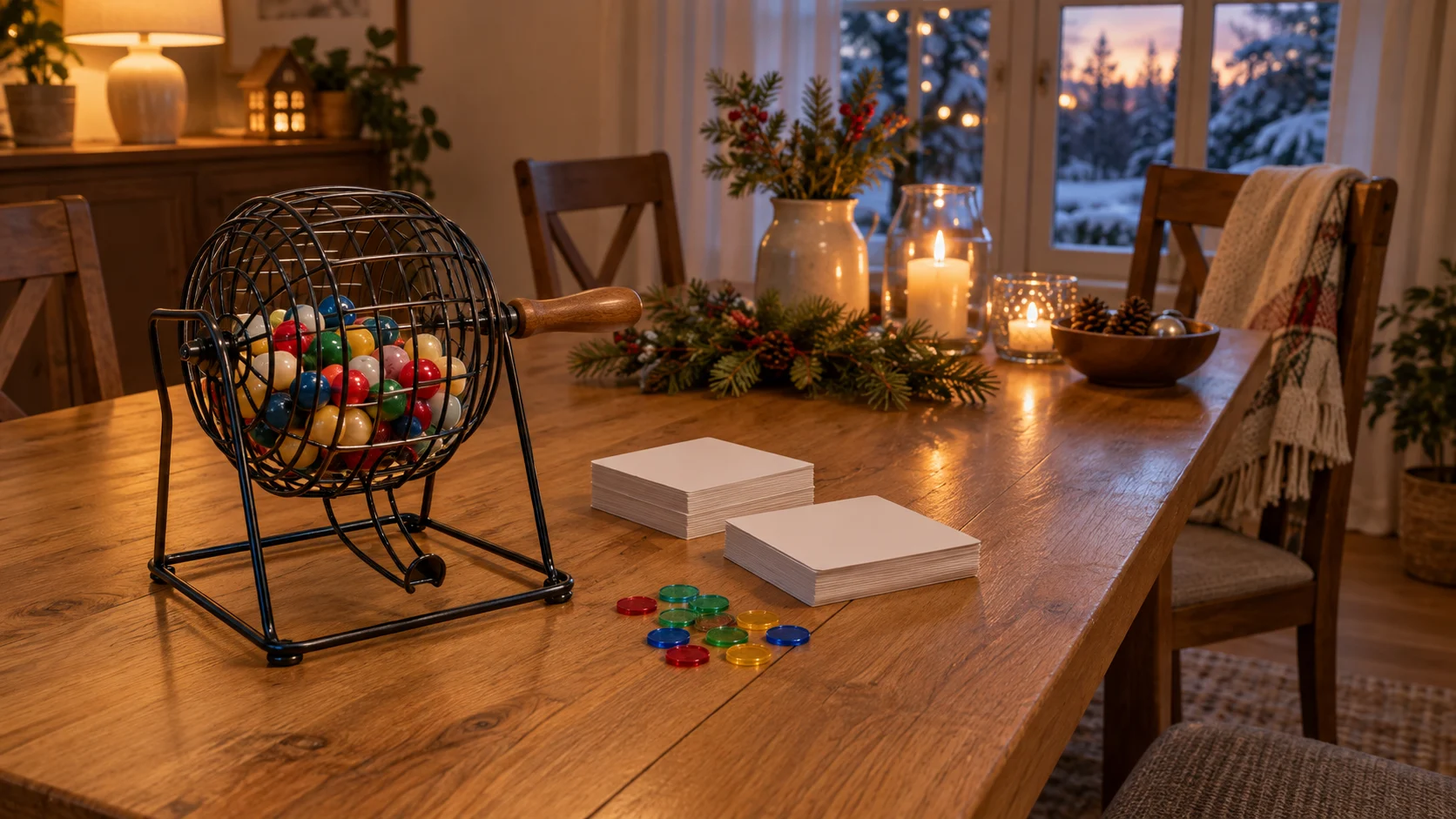
A Christmas bingo game can give willing guests one shared activity after dinner. Ask what part of the evening people would like to share and whether they want to learn this game. Keep the activity separate from the rest of the visit so a guest can watch, leave or choose another conversation.
The numbered-game example here follows the general play described in Schmidt Spiele’s Bingo instructions. Treat that account as a general rules reference, with operating questions attached to your actual equipment. Use your actual set’s instructions, and establish that its cards, number range and call record belong together before beginning.
Choose the holiday moment before opening the set
Ask who wants to play and which part of the visit can hold a shared game. A person serving dinner may want to join once the table is clear. Someone preparing to leave may prefer to watch. Their answers can help you choose an actual occasion without assigning every guest a card.
For an original imagined gathering, consider a host and several adult visitors who would like a game between dinner and dessert. They agree to play one round and decide afterwards whether to continue. Their agreement provides a place for the game in the visit, without predicting how many minutes it will take.
Keep the dessert plan visible when choosing the moment. If the table will soon be needed again, another surface or another time may suit the gathering better. A game does not make the room’s other uses disappear. Ask the people involved before occupying a place they are expecting to use.
Invite someone who is unfamiliar with bingo to hear the explanation before deciding. They can ask about a term or look at a card without committing to play. An experienced guest can also choose to watch this round. Leave both choices welcome.
Read the two bingo-set offers separately
The CHH 5204 Gold Bingo Set description lists 85 number balls and 30 cards; its title and description give different sizes. The GSE Deluxe Bingo Game Set describes 75 balls, B1 through O75, and 50 cards.
Keep the CHH ball-count question open until information for that actual offer resolves it. Do not quietly replace its listed count with the GSE count. If you already own a complete suitable game, the holiday invitation can remain independent of a new order.
Identify the set you intend to use and its instructions before sharing out pieces. Keep an unfamiliar loose card or ball separate until you know where it belongs. The source descriptions do not establish that components from these two offers can be mixed into one game.
A large package does not decide how many cards each guest wants to manage. Begin with the people taking part and the instructions for your actual game. If the group wants a simpler opening, agree on that before the first call instead of quietly changing another player’s arrangement later.
Agree on the winning line
Schmidt’s version uses five covered spaces horizontally, vertically or diagonally, with the centre free space covered before play. A caller reads a drawn letter and number; players cover a matching space. The caller records draws on the master board. A claimed line is checked against that record.
Explain the selected win condition using the cards you will use. Ask someone to point to the kind of line the group will recognise. Keep this demonstration separate from play. If a guest remembers another version, settle which account you are using before anyone begins marking calls.
For an invented example, imagine that one guest points to a horizontal line while another expects the whole card to be covered. Those are different goals. Discuss the difference while the cards are still clear, and give everyone the same explanation of the chosen round.
Keep any decision about simultaneous claims with the actual game’s rules or an explicitly agreed household arrangement. Tell players the decision before starting. The Christmas occasion does not supply a rule by itself, and a disagreement after a claim is harder to resolve if nobody agreed what would happen.
Give the holiday bingo caller a clear job
Choose a holiday bingo caller who wants that role and can use the set under its instructions. Ask whether someone would prefer to call this round and play a later one. Keep changing roles separate from making an unannounced change during an active round.
Let the group hear a sample call before play. In an imagined demonstration, the caller says “B twelve,” then asks whether everyone heard both parts. A guest who heard the number but missed the letter can ask for clarification while the example remains a demonstration.
Agree that a request to repeat a call is welcome. At a holiday visit, conversation may continue nearby, and someone may miss a word. Respond to the request actually made. If several guests regularly need the same call repeated, ask the group what pace or seating arrangement they would prefer.
Keep the call record available for its purpose. If someone wants to discuss a family story, you can pause the activity and enjoy the conversation. Resume only when the people still playing are ready. Do not let the next call quietly occur underneath a discussion that has become the group’s focus.
Look at each call before moving on
Ask players whether they have finished considering a call before continuing. A person may be reading the card, checking the letter or deciding that the value is absent. Give them room to make that decision without another guest reaching over and managing their card uninvited.
In an original hypothetical exchange, the caller says B twelve and a player asks whether the number was twenty. Clarify what the actual drawn piece shows before moving forward. Keep the explanation attached to that call, rather than using the question as a reason to change the game’s number range.
If someone marks the wrong place and notices immediately, use the actual game’s rules to address it. The useful conversation concerns the call and the mark involved. Avoid turning an ordinary correction into a running joke about the guest’s hearing, attention or general ability.
A person watching may enjoy following the same sequence without holding a card. They can remain part of the visit. Ask before giving them a task such as helping another guest, especially if that would change the way the other person intended to play.
Check a bingo line before declaring the result
A win claim gives the group a specific result to examine. Ask the claimant to explain which part of the card they believe has finished the round. The phrase check a bingo line should mean a specific examination everyone can follow.
Imagine a player pointing to a completed-looking diagonal. Ask which spaces make up the claim and let the group follow the check. Let the person explain their claim before another guest supplies an answer on their behalf. An explanation that everyone can follow gives the discussion something more specific than a loud agreement or disagreement.
If a marked value cannot be found in that record, identify the discrepancy before announcing a winner. Follow the applicable rules for what happens next. Do not invent an earlier call merely because the line looks complete or because other guests would like to move on to dessert.
A quiet check can also protect the claimant from an argument based only on someone else’s recollection. Keep the discussion about what was called and what the selected rules require. If the group decides to stop without resolving a disputed game, describe it as unfinished.
Follow one imagined call without changing the record
Consider an invented practice example before the round. A caller has a piece marked B twelve. One player finds that value on their card; another player does not. Ask both people to explain their next action under the chosen rules. A missing value is an ordinary possibility in this demonstration, and it gives the second person a specific question to ask before play.
Now imagine that a later guest asks whether twelve has already been called. Look at the recorded calls from this round. Keep the earlier demonstration out of that record. Saying a number during the explanation does not make it a draw in the game that follows. Tell the group clearly when the demonstration ends and the real round begins.
If you used any pieces during that explanation, restore the actual set for a fresh round according to its instructions. Ask whether anyone still wants an example. Begin when the group understands the shared plan, with the demonstration kept separate from the result you will eventually check.
Keep buying supplies separate from playing
At republeq.com, purchases can use supported cryptocurrency options, including USDT. That shopping choice is separate from the household game described here. This plan supplies no entry fee, wager, cash prize or instruction to collect cryptocurrency from participants. The proposed invitation concerns sharing an activity during a visit. If you decide to buy a set using crypto, identify the actual offer and resolve the contents questions first. Write down which product you intend to order and what still needs an answer. The CHH ball-count discrepancy remains a question even when the payment method has already been chosen. A different checkout route cannot settle what arrives in the box. Keep any proposed contribution from another adult separate from the merchant’s order. Ask what the person actually wants to contribute before including it in your own spending decision. Someone who brings an existing suitable game has made a different contribution from someone who orders a new package, and neither arrangement needs to become a requirement for joining the gathering. Read the payment and order information presented for your actual purchase. Check the selected product, complete amount and applicable terms before authorising it. This article gives no exchange-rate estimate, network-fee figure, delivery promise or assurance that a transaction can be reversed. Resolve an unfamiliar payment step through the information for that actual transaction. You can leave the purchase undecided and still hold the gathering. Use suitable equipment already available if the group wants to play, choose another shared activity or keep the time for conversation. Keep a shopping deadline from becoming pressure on a guest to pay, take part or accept an unresolved order.
Choose the next part of the visit together
The holiday Concentration guide offers a matching-rank card game. The Christmas dice gift exchange proposes a separate passing-and-swapping activity. Keep each game’s actual equipment and rules attached to that game.
Once the bingo round has a verified result, ask whether the group wants another. A person may prefer to call, watch or return to a conversation. Decide around the guests present at that moment. The existence of unused cards does not decide what the holiday visit should do next.