Crypto Commerce
CASABREWS 3700 Essential espresso machine vs PlumChef compact espresso machines
Compare CASABREWS 3700 Essential espresso machine by model identity, brew controls, milk work, included baskets, counter fit, and saved price.
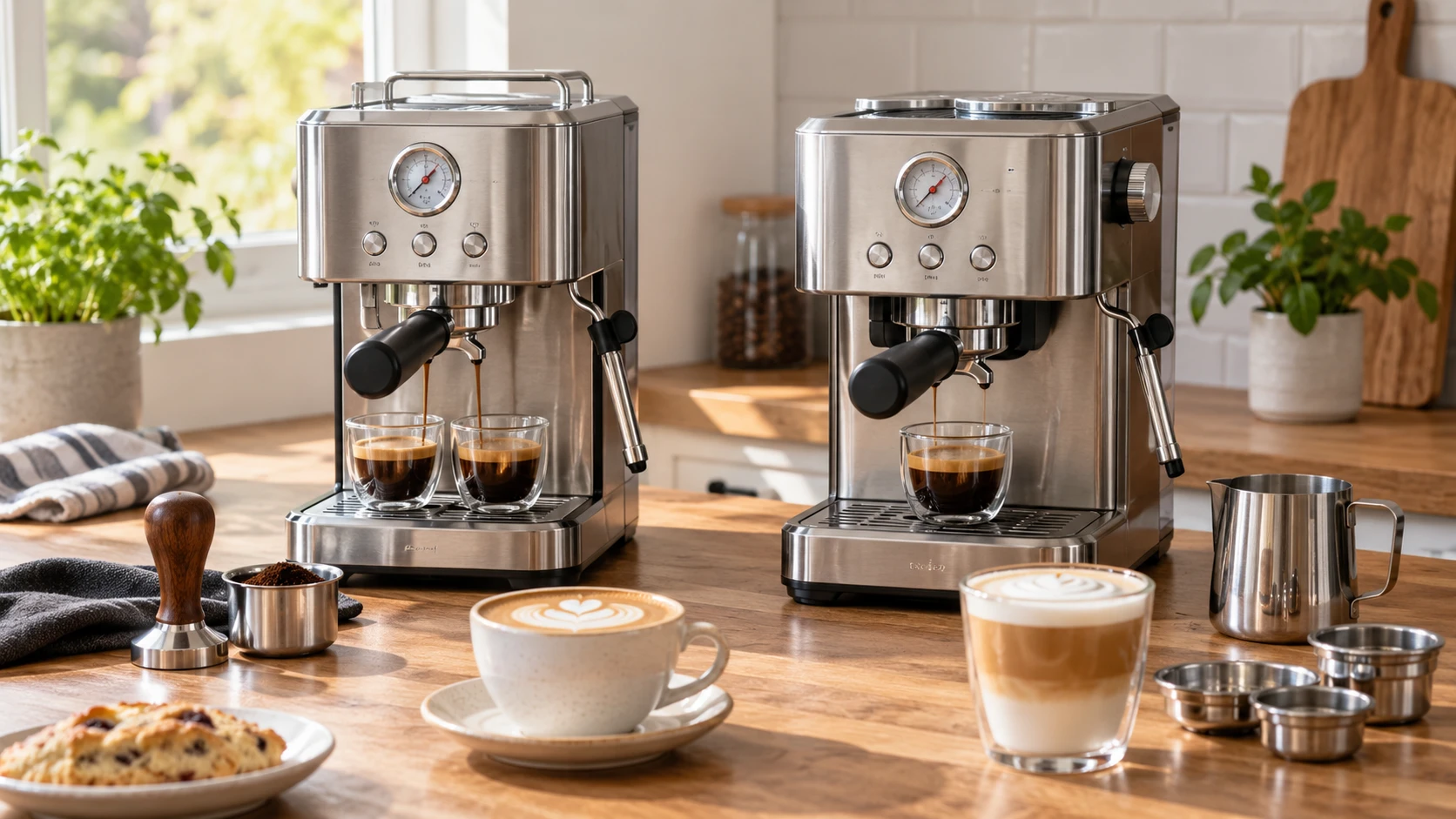
A small espresso machine can make milk drinks at home, but the work does not stop when you press a brew button. You still need suitable coffee, a way to dose and tamp it, room for a milk pitcher, and time to rinse parts. The CASABREWS 3700 Essential and PlumChef listings both describe 20-bar machines with steam wands and pressure gauges. They differ in the details they publish about brew controls, tank size, and pods. The saved CASABREWS description also names a different model code, which needs checking before relying on its feature list.
The September 30 catalog snapshot marked both products available. It listed a minimum of $260 for CASABREWS and $351 for PlumChef. Both exact product pages and a related guide returned HTTP 200 on October 3. Those historical prices and page checks do not establish the current bundle, the quality of a shot, or whether a feature in a mixed listing belongs to the unit shipped. Use the current manuals and model plates when comparing a purchase.
Confirm which machine is actually offered — PlumChef compact espresso machine
The CASABREWS 3700 Essential espresso machine title names the 3700 Essential. Its saved description, however, calls the machine CM5418 when explaining a 51 mm stainless-steel portafilter and 30 ml and 60 ml single- and double-shot presets. The source does not explain whether these are alternate names or mixed product copy. Check Republeq's product page for the exact model number, manual, portafilter diameter, and included baskets before purchasing accessories or planning around those presets.
PlumChef's listing describes a compact 20-bar semi-automatic espresso machine with a steam wand, pressure gauge, and 60-ounce removable water tank. It gives outside dimensions of 11 by 9.21 by 12.28 inches. These measurements help with a first counter layout, but leave room to lift the tank, lock in the portafilter, remove the drip tray, and use a milk pitcher. CASABREWS calls its cabinet compact without giving comparable dimensions in the pinned description. Request them for the exact model being sold.
Measure the space under upper cabinets as well as counter width. A machine that fits on the counter may be awkward if the water tank cannot be lifted or the wand cannot move freely. Put a cup under the group head in your sketch and note where used grounds will go. If the machine is stored between uses, consider the weight and how easy it is to carry without spilling water. Neither saved description gives a directly comparable weight or a complete installation diagram.
The two listings use “professional” and “barista” language. Those words do not establish a commercial duty cycle or a tested extraction standard. Check the warranty and permitted use for the exact unit, especially if it will serve an office or several households. For a kitchen, the more useful question is whether the controls and cleaning routine fit the number of drinks you make each day.
Compare brew controls, not just pump labels — grinder settings for espresso beans
Both Republeq product records advertise a 20-bar pump. That figure does not mean the coffee puck sees the same pressure throughout extraction, or that either machine will produce a better shot. Grind size, dose, basket, tamping, water temperature, and the machine's control all affect the result. The saved pages do not supply a same-bean taste test or a measured pressure profile. Treat the pump claim as one specification to verify, not a score.
CASABREWS describes a built-in pressure gauge and a purge function that adjusts water temperature after steaming. This could matter if you pull an espresso soon after heating the machine for milk. The description also gives those 30 ml and 60 ml shot presets under the CM5418 model code. Until that model mismatch is resolved, do not assume the specific preset volumes or portafilter size apply to a 3700 Essential shipment. Ask for a photo of the control panel and current manual.
PlumChef says its semi-automatic interface lets users adjust coffee amount, tamping force, and water temperature, though the saved text does not show a complete control menu. It describes a pressure gauge for feedback and says the machine can brew one or two cups. The listing also says it can use ground coffee and ESE pods, with separate one-cup, two-cup, and ESE filters in the package. Confirm that the selected bundle includes those baskets and that the pod type is genuinely compatible. “Coffee pods” can describe several incompatible formats.
The published grinder settings for espresso beans guide discusses other coffee equipment, but its basic question applies here: how will the coffee reach a grind suitable for the basket? Neither CASABREWS nor PlumChef describes a built-in grinder in the pinned source. If you plan to use beans, price a capable grinder and allow time to adjust it. If convenience matters more, check the exact PlumChef ESE-pod compatibility and the supply of pods you would buy. A portafilter machine cannot fix coffee that is ground too coarse or stale.
If the household switches between decaf and regular beans, plan how the grinder and baskets will be cleared between drinks. A machine that accepts a pod format for occasional use may simplify a second coffee choice, but only after the exact pod compatibility is confirmed. If you buy pre-ground coffee, ask how fine it was ground and when it was packed; a label saying “espresso” does not guarantee a useful result in every basket. Keep a brief note of the coffee, dose, setting, and shot volume when adjusting a recipe. That makes the next cup easier to repeat and helps separate a coffee-preparation problem from a machine-control problem. The product descriptions do not supply a ready-made recipe that will work with every bean.
Manual espresso rewards practice. A preset volume can simplify one step, while the grind, dose, distribution, and cleanup remain. If you want one milk drink every morning, count the steps from filling the tank to wiping the wand. If several people drink different beverages, consider how many consecutive pulls and milk-steaming sessions the machine can handle. Neither saved listing provides a controlled recovery-time test for that routine.
Plan the milk work and cleaning — PlumChef compact espresso machine
CASABREWS describes a steam wand for making milk foam. PlumChef also lists a rotatable steam wand and a removable drip tray. Both product descriptions use rich microfoam language, but neither gives a same-milk, same-pitcher texture test. The wand's range of motion, steam strength, and space beside the machine matter more than the adjectives. If milk drinks are your main purchase reason, look for an exact-model demonstration and check how the wand can be cleaned immediately after use.
Steam wands still require hands-on work. You need to fill a pitcher, position it, stop at a suitable temperature, wipe the wand, and purge it as directed. A person who wants a drink made by one touch may find this process pleasant or tedious. The saved CASABREWS copy calls the machine “automatic” in one sentence while describing a portafilter and steam wand. Verify what is automated rather than treating that word as a promise of automatic milk dispensing.
PlumChef's 60-ounce removable water tank may reduce refill frequency for a household making several drinks, provided its actual fill line and the counter layout suit you. The CASABREWS source does not give a comparable tank volume. Ask for that figure instead of assuming a compact cabinet always means a smaller tank. Both machines will also use water for heating, steaming, and cleaning, so a tank's nominal volume is not the number of finished drinks it guarantees.
Cleaning extends beyond emptying a drip tray. Grounds remain in the basket and group area; milk residue needs prompt attention; water quality affects scale. Find each exact manual's backflush, descaling, and gasket-care instructions. PlumChef lists a removable tray and CASABREWS names a purge function after steaming, but neither short source provides a complete maintenance schedule. A machine used every day should have replacement filters and seals available when needed.
Put the saved price difference in context — PlumChef compact espresso machine
The saved minimum-price difference is $91, with CASABREWS lower. That gap can narrow if the lower-priced machine lacks a basket, pitcher, tamper, or grinder you need. PlumChef's listing names one-cup, two-cup, and ESE filters, a portafilter, and a scoop in the package. CASABREWS's pinned description does not list a full bundle. Confirm every included part in the current cart, plus the return policy and who handles warranty service. An accessory list is not a performance test, but it changes the cost of getting started.
The model mismatch on CASABREWS should be resolved before choosing an aftermarket portafilter or basket. PlumChef's description also makes broad safety and pressure claims without independent test details. Check current certification markings and manuals for both rather than relying on a Republeq's catalog assurance that a pump pressure is “professional.” Neither listing gives a comparable reliability study or a measured noise result for a small kitchen.
Write down the drinks you make most: straight espresso, one cappuccino, or several lattes. Decide whether you prefer to adjust a grind and steam milk or use the PlumChef ESE option for some mornings. Measure the counter and verify the model code, baskets, water tank, and maintenance instructions. Then compare the current CASABREWS offer with the PlumChef compact espresso machine offer. The better fit is the one whose confirmed controls and daily work match your coffee routine.