Crypto Commerce
Bosch NITP660UC induction cooktop vs Equator hybrid: choose the cooking zones before the controls
Compare Bosch NITP660UC induction cooktop by zone layout, cookware, controls and installation.
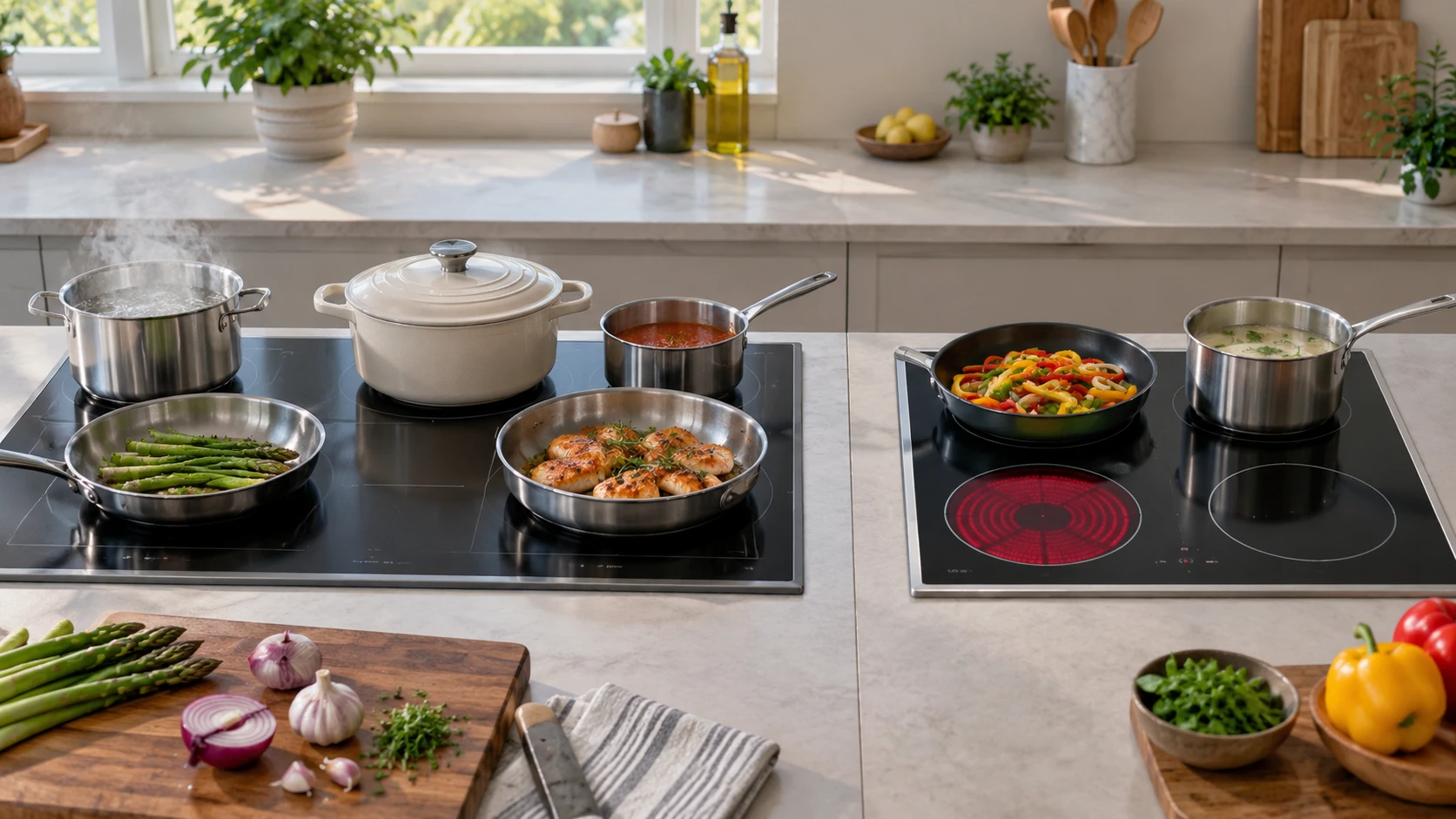
The Bosch NITP660UC induction cooktop is listed as a 36-inch, five-zone induction model with a flexible paired area and a large center zone. Equator's hybrid is listed as a 30-inch, four-zone cooktop with two induction elements and two ceramic radiant elements. The first decision is whether your everyday pans and cooking pattern favor an all-induction surface or a mixture of heating methods. The second is whether either unit can actually fit the counter, electrical installation, and clearances you have.
The saved descriptions list controls and convenience features, but they do not provide a shared cooking test. They also do not supply enough comparable installation and power-allocation data to rank speed or running cost. Use the specific model manuals and a qualified installer for those decisions. A nominal width and a mention of boost cannot establish that either cooktop can replace the one in your counter without work.
Take inventory of the pans first — Equator 30-inch hybrid cooktop
Bosch's saved listing describes five induction cooking zones. Induction requires compatible cookware; check each pot's base against the manufacturer's instructions rather than assuming every pan in a set will work. A simple magnet check can be a useful first screen for many pans, but base shape, diameter, and manufacturer specifications still matter. Bring the largest skillet, everyday saucepan, and any specialized pan into the comparison. If several are unsuitable, include the cost and practical value of replacing them.
Equator lists two induction elements and two ceramic elements. The ceramic radiant side can give you options for cookware that the induction side does not accept, subject to the manual's size and material rules. It does not mean every pan is a good fit on every zone. Check the minimum and maximum vessel sizes, flatness requirements, and whether the induction elements detect your smallest pan. For the ceramic side, ask how the heat spreads under a wide pan and which element can use the stated triple-heating-ring control.
The mixed surface matters most when a household has a few non-induction pans it wants to keep. If those pans are used daily, two ceramic zones might be useful. If almost all cooking already uses induction-ready pans, the Bosch layout offers a different reason to investigate it: more listed zones and the ability to join a pair into a larger cooking area. Neither product listing tells us how many of your pans can be used at once. Draw the cooking surface to scale and place circles for the pans used during a typical dinner.
Cookware also affects safety and maintenance. Induction heats a compatible vessel through a different process from a radiant ceramic element, but both surfaces and cookware can remain hot after cooking. Consult each manual for residual-heat signals, cleaning rules, and how the unit responds when a pan is removed. The Equator description does not document a residual-heat display, and the Bosch summary does not describe every safety indicator. Do not infer that a missing catalog detail means the feature is absent.
Compare the zone layouts at meal scale — Equator 30-inch hybrid cooktop
Bosch lists a 12-inch dual-ring center zone for large pots and pans. It also describes FlexInduction, which combines two cooking zones into one larger area. Those arrangements may help when a family uses a large stockpot or an elongated vessel, but check the supported pan shapes and dimensions in the current manual. A zone that looks spacious in a marketing image can still have a minimum pan size or positioning rule. Ask how the cooktop indicates that a pan has been detected and whether the flexible area requires a particular control sequence.
The Bosch description says PowerMove divides the FlexInduction area into three preset power-level regions, changing the setting as cookware moves across them. That could be useful for a task that starts hot and then simmers, provided the pan fits the area and the movement is comfortable. Try to understand the actual control sequence from the manual or a demonstration. Moving a heavy full pot across a glass surface may be less appealing than tapping a setting, even when the function works as described.
Equator lists four elements in a narrower, 30-inch format. Its description names a triple heating element, a boost function, a keep-warm button, and nine power levels in the product title. Find the zone diagram before comparing counts. Ask which element has the three rings, whether boost applies only to induction, and what happens if other elements are on at the same time. A four-element surface can be easier to use than a five-element one when the pans have enough room around their handles; it can also feel crowded if two wide skillets meet in the middle.
Take one representative meal with three simultaneous jobs, such as a pot of water, a skillet, and a small saucepan. Identify the exact zone each pan would use on each product. Leave space for handles and access to controls. Then repeat with your largest holiday or batch-cooking vessel. This simple exercise exposes a practical limit the headline zone count may hide. It also shows whether Bosch's center and flexible areas solve a real need or whether Equator's mix of heating methods is more useful to your cookware collection.
Check what happens when several zones run — cooktop power-sharing checks
Both product descriptions mention ways to change or increase heat, but neither gives a complete comparable account of simultaneous output. Bosch lists PowerMove and its flexible area without an electrical load table in this snapshot. Equator advertises a boost function that temporarily increases power, yet it does not say which other settings might be reduced while boost runs. Do not assume that the highest setting on every zone is available at once. Consult the manufacturer's power-allocation information and installation manual for the exact model.
The published guide on cooktop power-sharing checks offers a way to ask that question when several pans cook together. Use it to make a realistic simultaneous-load scenario rather than comparing a single peak figure. The guide does not certify either Bosch or Equator's performance. Request the specific zone rating and power-sharing rules for these models, including how a flexible area or boost mode changes the available output elsewhere.
Power sharing matters differently to different cooks. If you often boil a large pot while searing and simmering, a temporary drop on one zone could affect timing. If meals usually use one or two pans, the simultaneous maximum may rarely be relevant. Ask about the controls' feedback when output is limited: does the display change, does a setting flash, or does the manual instruct you to manage the load yourself? The saved listings do not answer those questions.
Keep electrical input separate from cooking performance claims. The Equator title includes 220V, while the Bosch catalog summary does not list a comparable supply specification. That title detail is not an installation plan. An electrician or qualified installer should check the nameplate, breaker, wiring, cutout, and local requirements against the current manufacturer instructions. Do not plan a replacement circuit from a Republeq's catalog headline or assume a 30-inch opening will suit a 36-inch appliance.
Controls you can use with wet hands and a busy stove — Equator 30-inch hybrid cooktop
Bosch lists Home Connect for linking the cooktop to a smart device. Check which functions work at the cooktop itself and which require an app, account, network, or supported phone. A connected feature may be convenient for information or routines, but the daily cooking controls should still suit the person standing at the stove. Look at how to turn a zone on, select a power level, pause cooking, and shut everything off. The catalog does not describe those steps in enough detail to compare them with Equator's panel.
Equator lists a digital display, slider touch controls, a timer, a child lock, automatic shutoff after a set period, and a keep-warm control. Its description says the keep-warm button operates at approximately 135°F. Verify where that temperature is measured and which vessels and foods the manual considers suitable. An approximate control setting is not a food-safety guarantee. Ask whether the timer alerts you, turns a zone off, or can do both; the saved description specifically mentions an alert but does not establish every timer behavior.
Equator's listing also mentions high- and low-voltage protection. That claim should be checked in the manual for its exact scope. It does not replace correct electrical installation or surge protection decisions made for the home. For the child lock and automatic shutoff, learn the activation steps and limits. A lock can prevent unintended operation, but it does not make a hot surface safe to touch. Ask how controls respond if water or a cloth covers the touch area during cooking.
The best interface is the one a cook can operate without breaking the workflow. If a meal involves frequent small heat changes, try the Equator slider and Bosch zone controls in a store or consult detailed demonstrations. If a housemate uses the kitchen, ask them to repeat a common task without coaching. That test can reveal whether advanced zone features are worth learning. A longer feature list alone says little about how the controls feel in a crowded cooking session.
Installation and the actual offer — Equator 30-inch hybrid cooktop
The Bosch is listed at 36 inches wide; the Equator title says 30 inches. Neither nominal size is a cutout specification. Check the counter opening, support structure, cabinet clearance, ventilation instructions, and distance to nearby surfaces against the manufacturer's current installation drawing. If changing from gas or from another electric cooktop, account for any additional work before comparing purchase prices. Do not modify a counter or order a unit until the exact model's requirements are confirmed.
The saved catalog prices and availability describe offers at one point in time. Get a current quote for the cooktop, delivery, installation, any counter work, and removal of the old unit. Confirm the selected finish and model number on the order. Ask about return conditions after a box is opened or an installer finds a fit problem. These details can outweigh a small price difference, especially when a wide opening or electrical upgrade is involved.
For routine upkeep, check each manufacturer's approved cleaning method for the glass surface and the edges around controls. Ask how a spill behaves at the edge of a flexible zone and whether the Equator's ceramic elements have specific cooling and cleaning instructions. The saved descriptions do not provide comparable durability or repair data. Do not treat an extra electronic feature as proof of either higher or lower reliability without evidence.
Make the choice with a dinner plan — Equator 30-inch hybrid cooktop
Bosch deserves closer investigation if your cookware is induction compatible, a 36-inch installation is feasible, and you would use the large center zone or joined flexible area. Verify the pan-detection and PowerMove instructions, the simultaneous-power rules, and the current installation drawing. Its five-zone count is only valuable if the zones fit the pans and tasks you actually run together.
The Equator 30-inch hybrid cooktop deserves closer investigation if keeping non-induction cookware is a priority and a four-element, two-technology layout suits the counter. Verify which element supports the triple ring, how boost shares power, and what the keep-warm and timer controls actually do. Its mix of ceramic and induction should be evaluated with your own pans and food routine.
Write down a typical three-pan meal and the largest pan you own. Map those pans to both zone diagrams, then take the exact model numbers and counter measurements to the installation manuals. This separates the appealing controls from the two practical gates that decide whether the cooktop belongs in the kitchen: vessel fit and safe installation.