Crypto Commerce
AMFWALAMF 3.2-cu-ft mini fridge vs Frostorm 3.2-cu-ft mini fridges with or without a freezer
Compare AMFWALAMF 3.2-cu-ft mini fridge by compartment use, cabinet fit, temperature evidence, and upkeep.
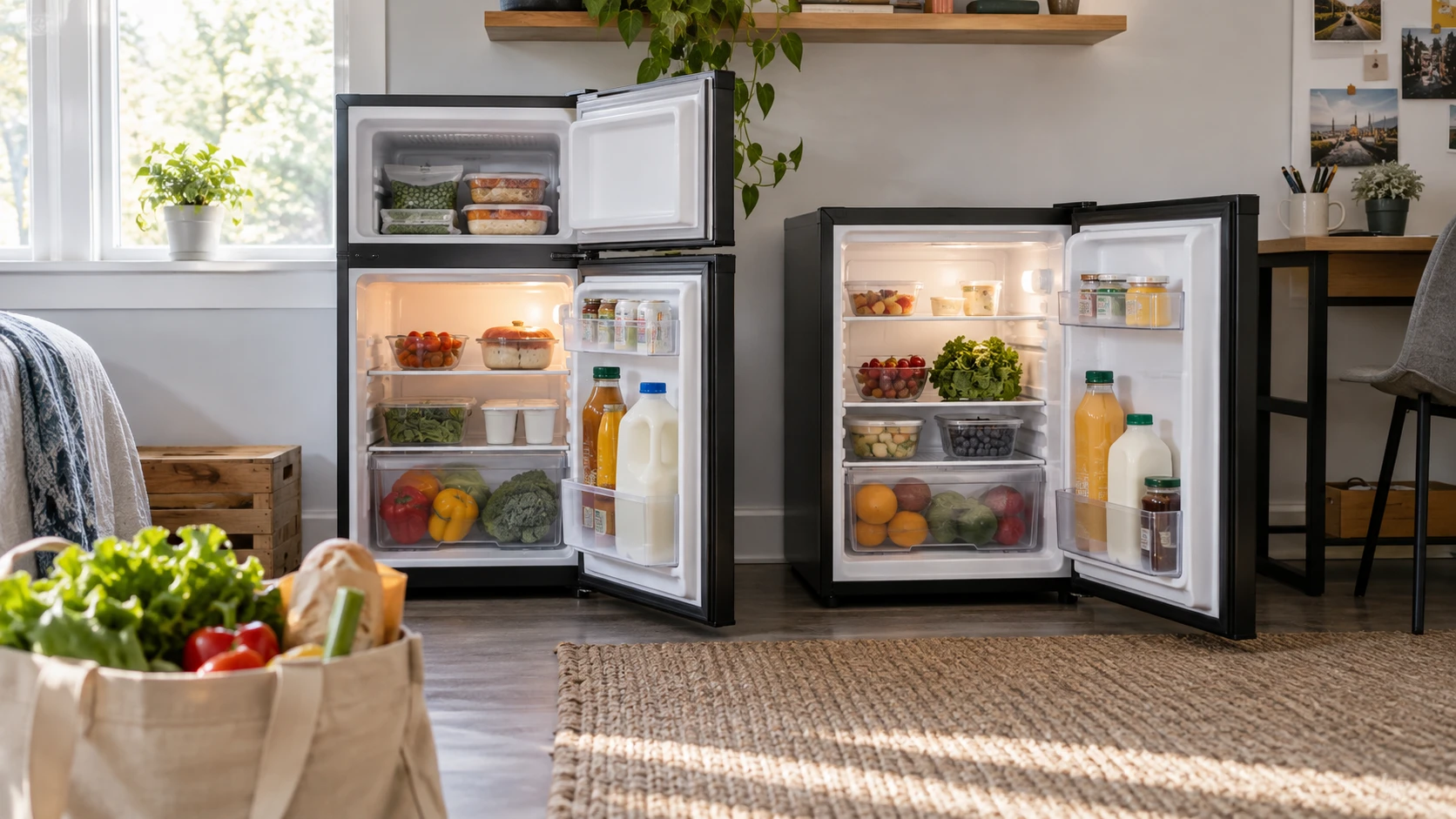
Two fridges can carry the same 3.2-cubic-foot headline and serve different meals. The AMFWALAMF 3.2-cu-ft mini fridge divides its listed capacity into 2.26 cubic feet for refrigerated food and 0.95 cubic feet for a freezer. Frostorm's 3.2-cubic-foot listing describes a one-door cabinet with no freezer. Those are different answers to a small-room storage problem. If you need ice or frozen meals, AMFWALAMF offers a separate section for them. If all your groceries need refrigeration, giving part of the cabinet to a freezer may work against you.
The two AMFWALAMF compartment figures add to 3.21 cubic feet, a small rounding difference from its advertised 3.2 total. Frostorm's saved description does not break down usable interior space, even though it says the unit has no freezer. It would be premature to count every cubic inch of its headline capacity as open shelf space. The published guide on mini fridge compartment capacity explains how shelves, door racks, and compartment shapes affect what fits. Its advice is general; it is not an interior measurement of either model. Ask for current diagrams and compare them with the dimensions of the containers you actually use.
Start with a week's groceries — mini fridge compartment capacity
Make two lists: food that must stay refrigerated and food that must remain frozen. Include the largest package in each category. A milk carton, lunch container, and tall drink bottle all need room to stand or lie without blocking the door. Frozen meals, an ice tray, and a small bag of vegetables can crowd a freezer long before its stated volume sounds full. If your freezer list is empty, the Frostorm layout may be simpler to live with. If you expect to freeze food regularly, decide whether AMFWALAMF's stated 0.95 cubic foot can hold the packages you buy, not just whether it has a freezer door.
AMFWALAMF describes door shelves, a crisper drawer, and a repositionable shelf in the refrigerator. Those pieces may help separate produce from drinks, but they also take up physical space. Check how high the shelf can sit and whether a bottle in the door rack intrudes into the main compartment when you close it. The source does not provide shelf spans, drawer depth, or load ratings. If several people will share the unit, sketch where each person's food goes. This can expose an access problem that the total cubic-foot number cannot show.
Frostorm describes tempered-glass shelves and a crisper. Its saved text does not say how many shelves are included or whether every shelf can be moved. It also does not give door-bin measurements. Ask for an interior photograph with the door open and the shelves installed. A freezerless layout might let you keep more refrigerated items at once, but that benefit depends on the interior design, not simply the absence of a freezer. If you already have another appliance for frozen food, measure the overflow you expect this second fridge to hold. A cabinet full of beverages requires a different layout from one holding prepared meals and produce.
Consider how often you shop. Someone who buys fresh food every few days might value accessible crisper and shelf space more than an occasional ice tray. A person who cooks batches and freezes portions might prefer the double-door split even if the refrigerated section is smaller. These are use cases, not performance claims about either product. Take your own container measurements to the current listing or manufacturer drawing. The best layout is the one that holds the week's food without making you unload half the fridge to reach a carton at the back.
Plan access and fit before ordering — Frostorm freezerless mini fridge
AMFWALAMF's saved description calls it a double-door refrigerator and freezer. Separate doors can make it easier to reach the section you need without opening both compartments. The description says the door is reversible, but it does not clarify which door or doors can be rehung or what hardware is required. Confirm that detail in the manual before planning a tight corner. It also mentions two adjustable feet for uneven floors and an interior light. The light may help in a dorm room at night, while the feet still need to be set according to the installation instructions.
Frostorm lists one door, a recessed handle, and adjustable leveling feet. Its outside dimensions are 18.9 by 17.72 by 32.72 inches, but the saved description does not label each axis. Ask for a width-depth-height diagram so you can plan a narrow alcove accurately. AMFWALAMF's saved excerpt does not provide any outside dimensions. That missing specification is important: both products claim 3.2 cubic feet, yet their cabinets need not have the same footprint or height. Do not assume one fits under a shelf because the other does.
Measure the doorway, the floor spot, and the swing of nearby furniture. Then add the ventilation clearances specified for the exact unit. Neither short description gives complete clearance requirements or cord length. A fridge that slips into a bare space may be hard to clean if you cannot pull it forward, and a door can strike a desk even when the cabinet itself fits. If the room has a single convenient outlet, verify that the intended placement meets the manual's electrical instructions. These practical measurements can decide the purchase before small differences in racks or lights matter.
The AMFWALAMF listing marks the product as “Restored Home.” Find out what that means for the exact unit offered, including condition, included parts, return terms, and warranty. The label does not itself establish how old the compressor is or what work was done. Frostorm's saved description does not use that condition label, but it also does not supply a warranty term. Request the current terms for both offers. A compact refrigerator can be cumbersome to move back out of a dorm or apartment if it arrives with a missing shelf or a door that will not seal.
Verify temperature instead of trusting the dial — Frostorm freezerless mini fridge
AMFWALAMF describes a five-level thermostat and gives a range written as “6.8 -11.2℉.” The order and compartment are unclear in the saved excerpt. It would be unsafe to treat those numbers as verified fresh-food temperatures or as a freezer guarantee. Ask the manufacturer which compartment the numbers describe and how the dial settings relate to measured temperature. Frostorm mentions a mechanical temperature dial but provides no temperature range in its saved description. The absence of a number is a reason to consult its manual, not evidence that it cools better or worse.
Once either fridge is installed, place a thermometer in the refrigerated section and let it stabilize. AMFWALAMF has a separate freezer, so use a second thermometer there if you intend to store frozen food. Observe temperatures after normal door openings and after adding groceries. Follow current food-safety guidance for perishables rather than choosing a dial position by its number alone. Room temperature, load, and door use can change results. Neither short source establishes independent controls for AMFWALAMF's two sections or permitted ambient conditions for either model.
If the unit will sit near a heater, in direct sun, or in a room that becomes unusually cold, check the manufacturer's operating-environment limits first. A small cabinet can respond differently to a warm office full of people than to a quiet bedroom overnight. That does not mean either model is unsuitable; the saved descriptions simply do not answer the question. A thermometer reading under your real pattern of use is more useful than a promotional phrase about quick cooling or a thermostat with several positions.
Compare upkeep and running claims — Frostorm freezerless mini fridge
Frostorm lists energy use of 1 kWh per day and a rated sound level of 39 dB. It also says the unit uses R600a refrigerant, is ETL safety certified, and meets DOE energy requirements. These are claims in the saved product description; check the current energy label and certification information for the exact model before treating them as verified test results. AMFWALAMF says its compressor uses little energy and cools quietly, but provides no numeric consumption or sound measurement in the saved excerpt. The two descriptions do not support a direct energy or noise ranking.
If electricity cost matters, compare energy figures with the same units and test basis, then apply your local electricity rate. Actual use can vary with room temperature, thermostat position, and how often the door opens. A single sound figure also may not predict what you notice beside a bed. Compressor starts and cabinet vibration can be more distracting than a steady hum. Level the fridge, leave the required clearance, and keep loose items from touching it. Ask about the exact measurement method if a few decibels would determine your choice.
A freezer adds another maintenance question for AMFWALAMF. The saved description does not specify its defrost method, frost-management instructions, or where meltwater goes. Frostorm has no freezer, but its interior still needs regular cleaning and a clear drain or water-handling procedure if the manual specifies one. Read each manual before the first cleanup and decide where food can wait while the appliance is off. Never scrape a cooling surface with a sharp improvised tool. Check the setup instructions for any waiting period before loading food after transport.
The Frostorm freezerless mini fridge uses a refrigerator-only layout, though its source does not quantify usable shelf volume. AMFWALAMF provides an advertised freezer and a smaller stated fresh-food section; its Restored Home condition and ambiguous temperature range need clarification. Resolve the missing dimensions and interior measurements, then choose according to what needs to stay cold in your room. After installation, let thermometer readings confirm how the chosen unit handles your actual food load.