Speakers, PA & Home Theater
Sony ULT Field 1 vs JBL Clip 4: a lighter carry or a broader speaker bundle?
Compare Sony ULT Field 1 and JBL Clip 4 by listed price, clip attachment, carry weight, stated playtime, speaker features and the exact bundle contents.
JBL's Clip 4 bundle is listed at $74.94, while the Sony ULT Field 1 bundle is $199.99. If you want a small speaker that clips to a bag for occasional music, the JBL is the cheaper starting point. The Sony costs $125.05 more in these listings, so its documented capabilities and extra accessories should answer a need you already have.
Sony ULT Field 1 vs JBL Clip 4 compares two portable Bluetooth speakers from different brands in Republeq's Premium Audio category. The offer here is a blue Clip 4 with a USB adapter and microfiber cloth, against a white Sony speaker bundled with a six-foot braided USB-C cable, separate in-ear headphones and a two-year protection pack. Buying either offer means assessing the package as well as the speaker.
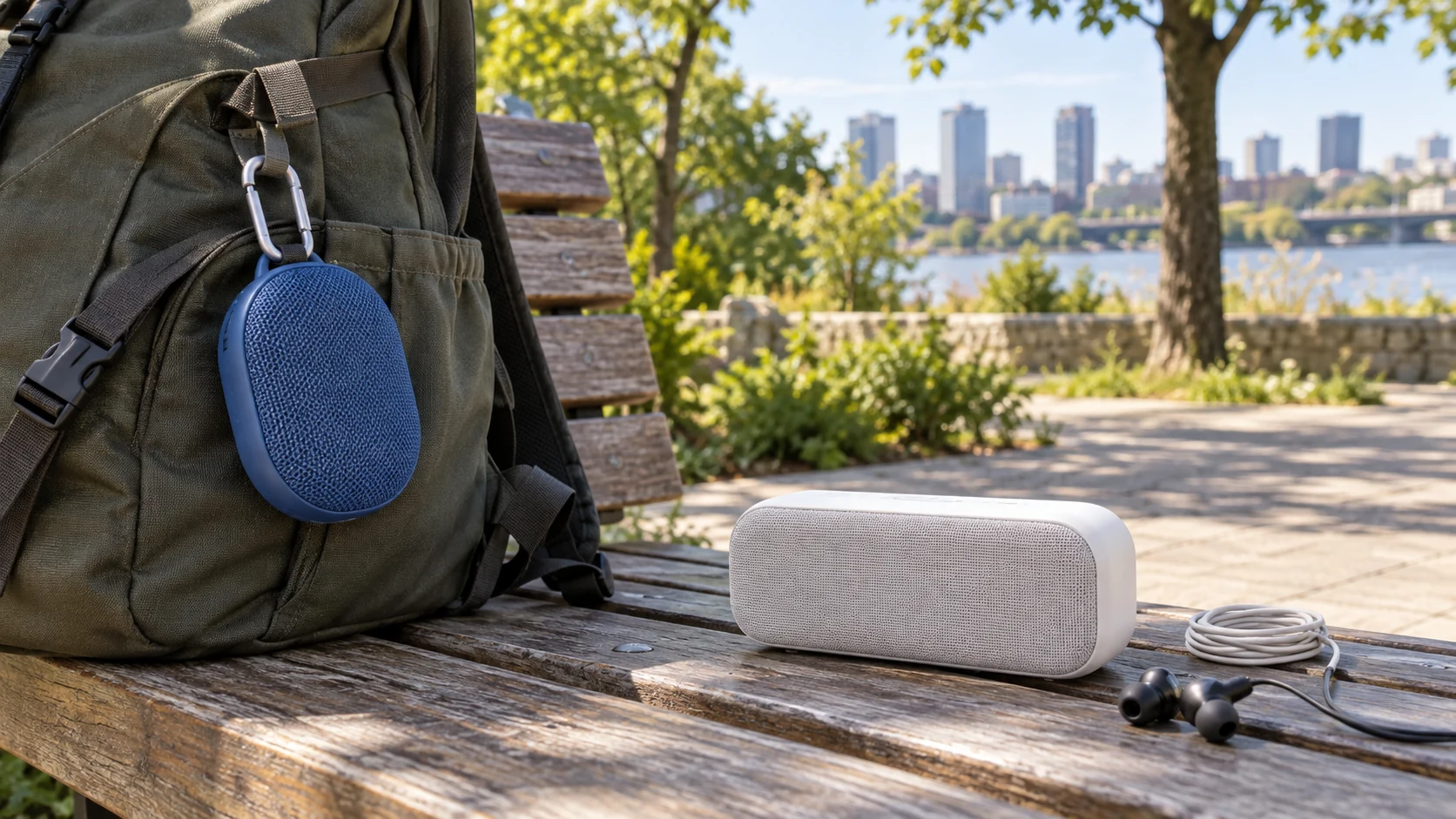
The editorial image uses generic speakers to illustrate the carrying choice. It is not a photograph of these exact models or their supplied accessories.
Clip-on Bluetooth speaker: what the carabiner changes
The JBL Clip 4 blue bundle puts its carrying feature on the speaker itself. JBL's official model information describes an integrated carabiner for attaching it to a bag, belt or buckle. This may suit someone who wants to keep a speaker accessible without dedicating a large pocket to it.
A clip-on Bluetooth speaker still needs a sensible place to hang. Look at the strap or loop on the bag you actually carry, and consider whether the speaker would move against other belongings. A convenient attachment on one bag can be awkward on another. The catalogue does not provide a comparison of comfort on your backpack or a load rating for its loops.
The Sony specification lists a strap belt with its standard speaker package, but that is a different carrying arrangement from JBL's integrated clip. Decide whether you want a speaker attached outside the bag, held by a strap, or packed away until you reach a table. These choices affect how you retrieve it even before considering the sound.
For a shared train or quiet waiting area, headphones can make more sense than a speaker. Sony's listed bundle includes separate in-ear headphones, which could cover personal listening, subject to their connector and your device. Confirm that connection if these headphones are part of your reason for paying more.
Portable speaker carry weight matters on foot
JBL publishes a Clip 4 weight of 0.239 kilograms, or 239 grams. Sony publishes approximately 650 grams for ULT Field 1. That puts the speaker-only difference at about 411 grams. JBL's lower portable speaker carry weight is a concrete advantage when every item has to accompany a long walk.
The manufacturers also describe different-sized bodies. Clip 4 is listed at 8.6 by 13.5 by 4.6 centimeters; Sony's dimensions are approximately 20.6 by 7.7 by 7.6 centimeters. Those shapes suit different bag spaces. The numbers do not establish how either package fits beside the lunch, bottle and jacket you normally carry.
Use the actual space you have as a purchasing requirement. A speaker destined for the outside of a small day bag should be evaluated differently from one carried in a car to a garden table. If it will stay on a desk most of the week, weight may barely influence the choice. If you keep leaving the current speaker at home because it is inconvenient to bring, carrying simplicity deserves more attention.
Compare the packed setup as well as the bare speakers. Sony's extra cable and headphones need somewhere to go if you take them with you. JBL's offered adapter may stay at home once the speaker is charged. The listed accessories do not erase JBL's speaker weight advantage, but the things you choose to carry determine the practical load.
Decide what the extra Sony spending buys you
The Sony ULT Field 1 white bundle brings a protection pack, braided cable and personal-listening earphones alongside the speaker. Separate the value of those accessories from the speaker's own capabilities. If you already have suitable headphones and a charging cable, duplicates may add little to this purchase.
Sony's official specification lists hands-free calling, Stereo Pair and its Music Center app. Those are reasons to investigate Sony if calls or a supported two-speaker setup matter to your use. The selected Clip 4 source does not establish the same features, so obtain model-specific confirmation instead of assuming every Bluetooth speaker provides them.
Do not price the protection pack as a known benefit until its terms are available. Ask who supplies it, what is covered, when coverage starts and how a claim is handled. The bundle names two years, but that duration alone does not explain exclusions or accidental-damage protection. You can still buy Sony for its speaker capabilities while keeping the pack's financial value unresolved.
The listed difference of $125.05 is large enough to justify a specific reason for spending it. That reason could be documented calling support or a bundle accessory you genuinely need. It should not be an assumed sound-quality improvement based on the higher price. Neither the retailer descriptions nor the figures compared here supply a matched listening test.
Ten and twelve hours need to match your session
JBL states up to ten hours of playtime for Clip 4. Sony lists approximately twelve hours for ULT Field 1. This is a smaller headline gap than the price difference, and the numbers were not produced by a common test for this guide. They do not show that Sony will last exactly two hours longer in your routine.
Think about the session you are buying for. A short lunch break, an afternoon at a table and continuous music across a long day each create a different charging requirement. Start with how long you need playback, then leave a margin instead of planning to run either speaker right to its published limit.
The speaker also has to be ready when you leave. Decide where it will normally charge and whether that location is convenient enough to use regularly. Check the actual supplied cable and adapter rather than assuming the bundle contains the complete arrangement you need. Sony's added cable has USB-C connectors at both ends; the named USB adapter in the JBL offer lacks a detailed output specification in the description examined here.
JBL lists a three-hour charging time for Clip 4. If you expect to top it up between arriving home and leaving again, compare that published duration with the time you actually have. It does not give a verified playback duration from a short partial charge. Sony's selected specification does not provide a comparable full-charge time, so obtain that information if turnaround between outings is central to your purchase.
Try the speaker you own at the intended listening volume before relying on it for a trip you cannot easily reschedule. That rehearsal can inform your charging plan. It is a check for the buyer to perform; this guide provides no measured endurance result.
Compare weather claims and listening priorities separately
Both official model sources give an IP67 rating. That does not distinguish their stated enclosure protection. It also does not assign the same protection to a supplied adapter, cable, cloth or pair of earphones. Follow the exact model's care instructions and keep the charging equipment appropriate to the conditions where it will be used.
JBL's small clipped format may be convenient for carrying, but convenience is separate from reaching a group across an open space. Sony's larger body similarly supplies no proof of better clarity at the farthest seat. If you can listen to both, use familiar material at comparable loudness and from your normal listening position.
The retailer copy uses broad sound descriptions. Those descriptions do not provide comparable measurements of vocal clarity, bass balance or usable volume. A buyer who mainly listens to speech can evaluate different material from someone who values bass-heavy music. Your preference should decide that part of the purchase once the carrying and budget requirements are satisfied.
If you are attracted to Sony but want to understand another higher-priced portable bundle, the Sony ULT Field 1 versus JBL Charge 5 buying guide compares a different JBL model at nearly the same listed price as Sony. It examines longer stated playback and a documented powerbank role. Those Charge 5 features should not be transferred to Clip 4 because both carry the JBL brand.
The W-KING D8 versus DinDin portable-speaker guide is relevant if playback inputs change your shortlist. It discusses one listing's AUX and USB options and the difficulty of interpreting unmatched runtime figures. That comparison broadens the buying questions while leaving this Sony/Clip 4 decision tied to its own offers.
Make the purchase around the job it will do
Choose the Clip 4 offer when inexpensive portable music, an integrated clip and the lower published speaker weight are your priorities. Check that the clip fits the way you intend to carry it and that the offered charging accessories suit the power source available. Its price advantage is documented; a sound or endurance advantage is not.
Investigate Sony when its listed hands-free calling or supported stereo setup is important enough to justify more spending and carrying weight. Check the usefulness of the supplied earphones and cable, and obtain the protection-pack terms before assigning it value. The additional items are worthwhile only when they contribute to your own use.
Before ordering, confirm the exact bundle, current total and return conditions. For Sony ULT Field 1 vs JBL Clip 4, settle whether you need Sony's additional documented roles before accepting its higher price and carry weight. If the intended job is occasional music from a speaker attached to a bag, start by checking the JBL clip against that bag.