Crypto Commerce
ViewGlow 34-inch ultrawide monitor for a wide game view
The ViewGlow 34-inch ultrawide monitor deserves consideration if your main aim is a broad game view and your preferred games support the intended ultrawide presentation. Its description lists a flat 21:9 screen, 3440x1440 resolution and a 100Hz refresh rate. The competing YEYIAN Avance description lists a 25-inch, 1920x1080 display at 240Hz. The choice depends on how much you value the wider format compared with the higher listed refresh rate, and what your gaming system can deliver.
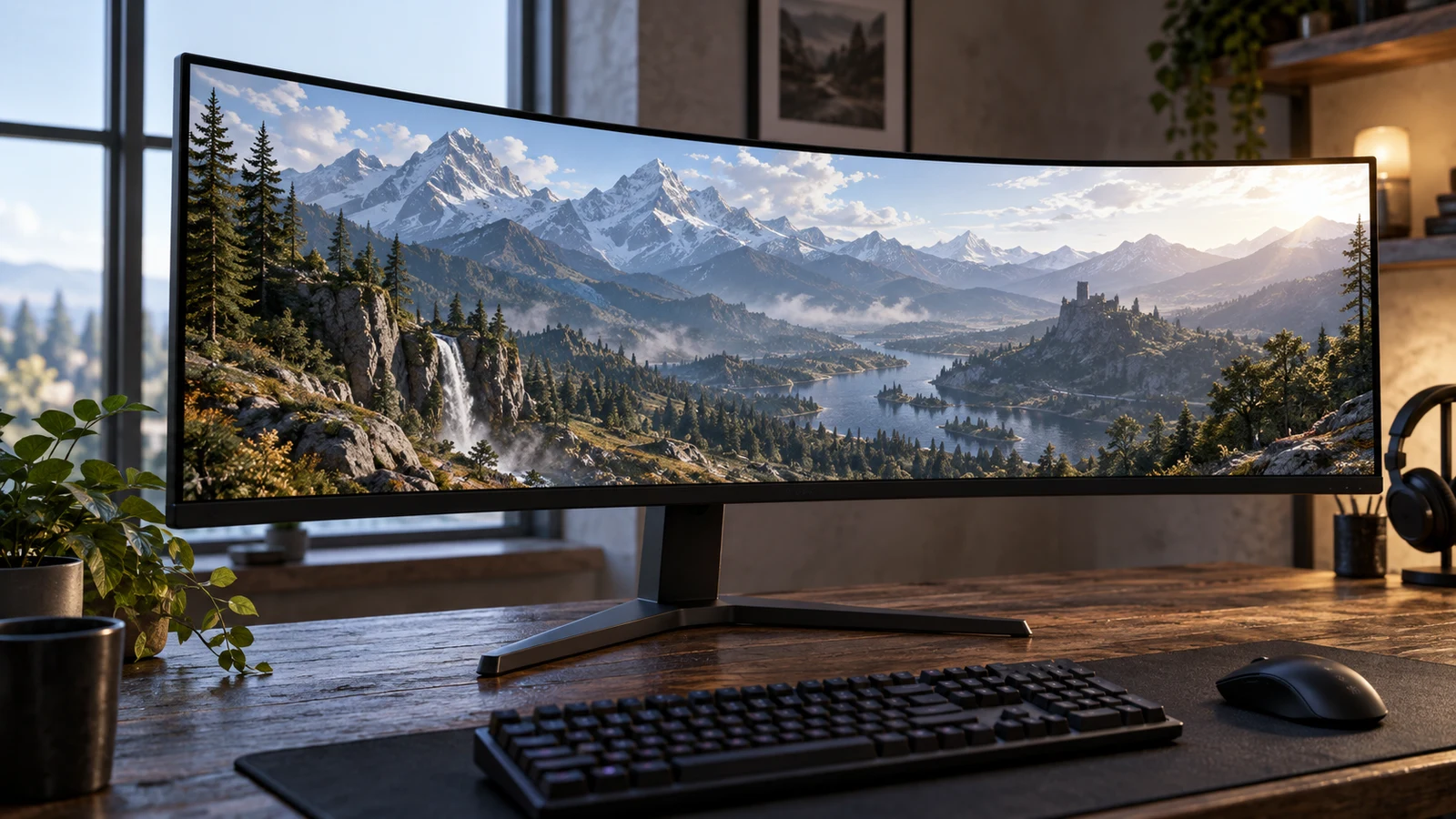
The ViewGlow 34-inch ultrawide monitor deserves consideration if your main aim is a broad game view and your preferred games support the intended ultrawide presentation. Its description lists a flat 21:9 screen, 3440x1440 resolution and a 100Hz refresh rate. The competing YEYIAN Avance description lists a 25-inch, 1920x1080 display at 240Hz. The choice depends on how much you value the wider format compared with the higher listed refresh rate, and what your gaming system can deliver.
Start with the game you return to most often. Would a broader view make exploration more enjoyable, or are you mainly trying to improve how movement looks during fast matches? Those preferences can lead to different purchases. Neither description establishes your frame rate, the behavior of a particular game or how comfortable either screen will feel from your chair.
The model discussed here is the flat 34-inch ViewGlow listed at 3440x1440, with LED backlighting and a stated 1ms response time. You can review the ViewGlow 34-inch ultrawide monitor while considering the checks below. Keep that exact configuration in view when seeking additional specifications; information about another ViewGlow screen would not settle questions about this one.
Compare Screen Aspect Ratio Before Fitting Content To A Display: ViewGlow’s Listed Starting Point
ViewGlow’s description supports a specific starting point: a 34-inch flat ultrawide screen with a listed 21:9 aspect ratio. A preference for that format is a reason to investigate the monitor, but it does not establish that every game will show more of its world. Before choosing it for a wide game view, check how your main titles handle the intended resolution and whether their presentation suits what you want to see.
Keep the physical screen and the game’s camera behavior separate in your assessment. Ask whether your chosen game supports 3440x1440, what happens during ordinary gameplay and whether menus remain comfortable to use. If a specific competitive mode matters, check that mode as well. A demonstration of a different title cannot answer those questions for the game that will occupy most of your evenings.
The related guide, Compare screen aspect ratio before fitting content to a display, addresses the broader content-fitting question. For this purchase, the narrower task is deciding whether ViewGlow’s particular screen format earns its place in your gaming setup. You do not need to prefer ultrawide screens for every activity to find one useful for a game you play regularly.
The stated 3440x1440 resolution identifies the pixel dimensions to investigate when checking performance. Avoid treating any benchmark labeled only “1440p” as an automatic match. Look for the actual tested resolution and the graphics settings used. If those differ from your proposed setup, regard the result as partial context rather than a prediction of what this monitor and your computer will produce together.
ViewGlow also lists LED backlighting. That description does not establish a particular panel technology, measured color accuracy or HDR performance. If bright highlights or dark-scene detail are important to your games, request information about those qualities separately. The supported resolution and backlighting details are useful specifications, but they do not answer every question about the resulting image.
The flat design is another explicit feature. Decide whether a flat ultrawide is what you want before spending time comparing less important extras. If you have only used smaller screens, a demonstration from a comfortable seated position may help you judge whether you enjoy taking in a broad display. Do not assume someone else’s preferred viewing distance will be comfortable at your desk.
Compare Screen Aspect Ratio Before Fitting Content To A Display: Assess Your Game At 3440x1440
A useful evaluation starts with a familiar scene. Choose a section of a game where you already know what you need to notice, such as a landscape you explore or a busy encounter you replay. If you can access a suitable demonstration, assess whether the wider presentation adds something you value. Treat this as a proposed evaluation method, not a claim that ViewGlow has been tested in that scene.
Pay attention to the information you use while playing. Can you comfortably read the interface while following the action? Would you want to change interface size or placement, and does the game provide those controls? These questions are especially useful when the appeal of the screen comes from a promotional image with little interface content. Your normal play session may ask more of the display.
ViewGlow’s listed 100Hz refresh rate is a display specification, not a promise that your games will run at a matching frame rate. Investigate performance using your intended computer and settings. If comparable test results are available, read their setup details before relying on them. A result from different hardware or a different quality preset should not become an unconditional expectation for your own machine.
Consider which settings you would willingly change to use the wider resolution. You might prefer a broader presentation enough to accept a lower quality preset, or you might want to preserve your current visual settings. Either preference is reasonable. Identify yours before buying so that the decision does not depend on an unspecified future hardware upgrade or a frame-rate assumption that neither product description supports.
The stated 1ms response time needs similarly careful interpretation. ViewGlow’s supplied description does not name the measurement method or operating conditions. YEYIAN specifies 1ms GTG, so the shared number alone does not establish identical motion performance. Neither response-time statement supplies a measured end-to-end input-lag result. If motion clarity is decisive, seek model-specific testing that explains how the measurement was obtained.
This leaves a practical threshold for the ViewGlow 34-inch ultrawide monitor: its wide format should offer a benefit you can identify in your own games, with performance compromises you accept. “More immersive” is too personal to settle from a specification sheet. Describe the desired benefit concretely, such as enjoying a broader landscape while keeping the interface comfortable to read, then check whether the proposed setup can provide it.
YEYIAN Monitor Alternative: Weigh 240Hz Against The Wider View
The YEYIAN monitor alternative is the Avance 25-inch Full HD model. Its description states 1920x1080 resolution, a 16:9 aspect ratio and a 240Hz refresh rate. That gives you a different configuration to evaluate: a smaller screen with a higher listed refresh rate. It does not establish that your computer will produce enough frames to use that capability as you intend.
If your main reason for replacing a monitor is dissatisfaction with movement during fast play, examine the YEYIAN configuration alongside ViewGlow. If you are satisfied with your present motion experience and primarily want a broad game view, ViewGlow may remain the more relevant candidate. Keep the reason for the purchase visible so that a higher number in an unrelated category does not decide it for you.
YEYIAN’s description explicitly lists AMD FreeSync Premium and NVIDIA G-Sync Compatible support. ViewGlow’s supplied description makes no corresponding adaptive-sync statement. That difference tells you what is documented here; it does not prove that ViewGlow lacks the capability. If adaptive sync matters to your choice, ask for confirmation for the exact ViewGlow model and check compatibility with the system you intend to use.
The YEYIAN description also names Shadow Boost, a feature described as improving visibility in dark scenes. That is worth investigating if dark game environments are a recurring concern for you. It is not evidence that the display will improve your results in a match. Assess whether the available image adjustments produce a view you actually prefer, without turning a feature name into a promised competitive advantage.
There is an unresolved detail in YEYIAN’s description: its panel is listed as “VA/IPS.” That wording does not identify one confirmed panel type for the unit you would receive. Ask the seller to resolve it if panel technology affects your decision. ViewGlow’s description also leaves its panel type unspecified, so neither model should win a panel-technology comparison on an assumption.
Other YEYIAN details include tilt adjustment and a 100x100mm VESA mounting pattern. These may help if you already have a particular mounting arrangement in mind. ViewGlow’s supplied description does not establish equivalent adjustments or mounting support. Compare those details only where they affect the proposed setup; an extra listed feature should carry more weight when you expect to use it.
YEYIAN Monitor Alternative: Resolve The Details That Could Change Your Choice
Before committing to ViewGlow, resolve the missing details that could make its wide format impractical for you. Request the overall dimensions and stand footprint for the exact model, then compare them with the space available. The stated screen size is not a complete set of installation dimensions. If an arm is essential, obtain confirmation of mounting compatibility and the relevant weight instead of assuming an existing arm will work.
Ask which ViewGlow input and connection support your intended 3440x1440 operating mode at 100Hz. Its supplied description does not identify the ports or supported modes by input. YEYIAN’s description names DisplayPort 1.4 and HDMI 2.1, but those details belong to YEYIAN. They cannot fill gaps in the ViewGlow specification or establish what your existing cable and source device will support.
A concise seller question could explain that you intend to use the flat 34-inch ViewGlow at 3440x1440 and 100Hz with your named graphics hardware, then ask which connection is appropriate. Include any essential mounting requirement in the same inquiry. This gives the seller a defined setup to address and helps you distinguish an answer about this model from general advice about gaming monitors.
For the final comparison, write a short reason for choosing each display. ViewGlow’s reason should explain why its wider presentation matters to your games. YEYIAN’s reason should explain why its higher listed refresh rate or another documented feature matters more to you. If one explanation depends on an unconfirmed capability, resolve that point before treating the comparison as settled.
Check the current product selection and order total before paying. If you intend to pay with crypto, read the currency, network and payment instructions actually presented for that order. Review any applicable delivery, warranty and return information separately. The monitor descriptions used here do not establish those terms, and a suitable screen specification does not answer a purchase-policy question.
Choose ViewGlow when the wide game view has a clear purpose in your play and the remaining fit questions have satisfactory answers. Favor the YEYIAN comparison when your priorities point toward its smaller Full HD format and higher listed refresh rate. Your next step is to check the exact ViewGlow configuration against the game and hardware you use most, with particular attention to any unanswered detail that would change your purchase.