Crypto Commerce
PROVISION ISR vs Gyration turret cameras: PoE and lens
The PROVISION ISR DAI-340IPEN-MVF gives you an explicitly described combination of PoE power and a 2.8-12mm varifocal lens. Gyration CYBERVIEW 411T-TAA has a stated turret design, a 1/3" CMOS sensor and detailed video options, but its supplied description leaves its power method and lens specification unanswered. If your installation requires both PoE and adjustable framing, the first camera has the more directly relevant documented features. That does not establish that the Gyration lacks them.
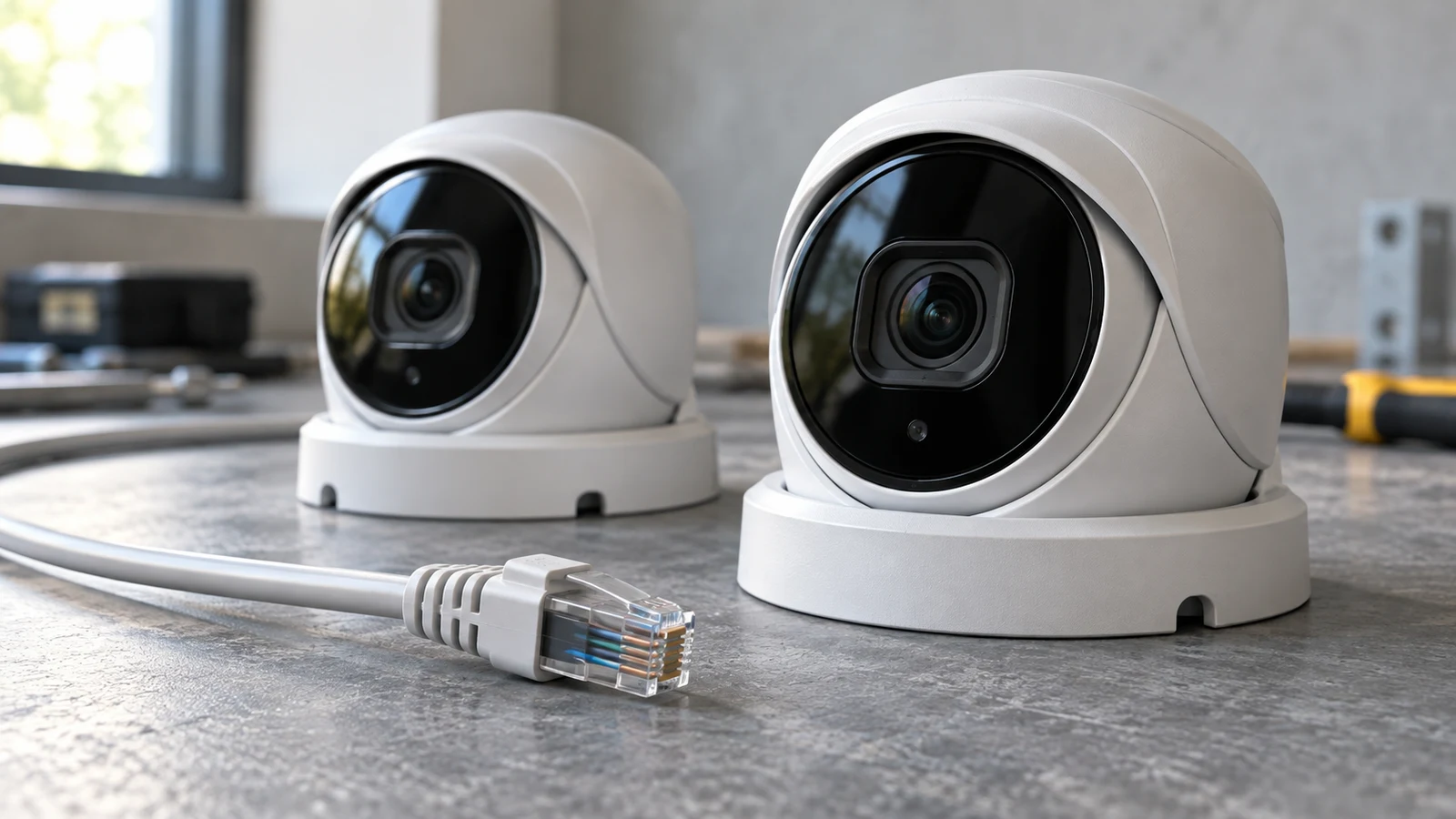
The PROVISION ISR DAI-340IPEN-MVF gives you an explicitly described combination of PoE power and a 2.8-12mm varifocal lens. Gyration CYBERVIEW 411T-TAA has a stated turret design, a 1/3" CMOS sensor and detailed video options, but its supplied description leaves its power method and lens specification unanswered. If your installation requires both PoE and adjustable framing, the first camera has the more directly relevant documented features. That does not establish that the Gyration lacks them.
The useful comparison is whether each exact model can satisfy the same installation brief. Housing shape alone cannot settle that question. Before choosing, separate what the description establishes about power and framing from what you still need to confirm about the connection to your recorder. This keeps a detailed feature list from obscuring an unanswered requirement that could change the purchase.
Gyration Camera Alternative: Compare The Lens And Power Details
The PROVISION ISR description states that PoE carries power and data over one cable. It also identifies the lens as varifocal, with a 2.8-12mm range for field-of-view adjustment. Those are separate capabilities: one addresses how the camera is connected and powered, while the other addresses how you can frame the intended area.
For the Gyration camera alternative, the supplied description establishes a white indoor/outdoor turret camera with 4MP color imaging. It does not specify a focal length, an adjustable lens range or a power method. Keep those entries unanswered in your comparison. Neither the turret label nor the listed image resolution supplies the missing information.
Write your requirement in terms an installer or seller can answer. For example, you might need a camera whose framing can be adjusted after choosing a mounting position, with power supplied through compatible Ethernet equipment. This is a hypothetical installation brief, not a claim that either product fits your particular site. It gives you a concrete reason to ask about the lens and power source together.
The varifocal description supports field-of-view adjustment on the DAI-340IPEN-MVF. It does not establish motorized adjustment, autofocus or the ability to change focal length remotely. If access to the proposed camera position would be difficult, ask how adjustment is performed before treating that feature as convenient for your installation. The adjustment procedure may matter as much to your purchase as the stated range.
Request the Gyration's exact lens specification and adjustment method in the same terms. Avoid asking only whether it has a “good viewing angle,” which leaves too much room for interpretation. Ask for the supported field of view and whether the lens is fixed or adjustable on the offered model. A seller's answer about a different CYBERVIEW variant would leave this comparison unresolved.
The sensor information is also uneven. Gyration identifies a 1/3" CMOS sensor; the supplied DAI-340IPEN-MVF description does not state sensor size. Both descriptions state 4MP imaging, but that shared label does not provide a matched comparison of the complete imaging systems. There is no supported basis here for declaring either camera sharper, more sensitive or better at recording a particular detail.
Gyration lists two 4MP video options, 2688 × 1520 and 2560 × 1440, each at 30/25fps. It also lists 3MP and 2MP options. The other description does not provide a comparable frame-rate table. If your recorder requires a particular resolution and frame rate together, ask about that combination on each model instead of assuming that matching megapixel labels settle it.
Gyration Camera Alternative: Define The Recorder Connection
The PROVISION ISR description explicitly mentions RTSP and use with common NVR setups. That gives you a documented starting point for a recorder discussion, but it does not name your recorder or guarantee every feature will transfer to it. Supply the recorder's exact model and ask which camera functions the proposed connection supports.
The same description also refers to compatibility with AHD and standard CCTV HD formats. It does not explain the physical connection or operating configuration behind those statements. Do not silently combine them into a promise that one camera will connect directly to every network or coaxial recorder. Ask the seller to identify the actual outputs and explain how the offered unit connects to your equipment.
For Gyration, the supplied description names compression options but does not establish a streaming protocol, PoE support or compatibility with a particular recorder. Ultra 265, H.265, H.264 and MJPEG are listed. Those details can inform a compatibility question, but they do not answer how the camera will communicate with the recorder you intend to use.
Describe the intended recording task separately from the physical connection. Ask whether the combination supports your required recording mode, playback access and any event functions you need. Neither supplied description establishes a complete continuous-recording arrangement. A camera feature and a recorder's handling of that feature are distinct parts of the purchase decision.
For example, Gyration lists cross-line, intrusion and enter/exit area detection. If you want a recorder to retain clips based on one of those events, ask whether that exact event reaches the selected recorder and can trigger the intended action. This is a question to resolve, not an integration established by the camera's analytics description.
Use Camera Battery Planning For Time Away From Charging: A Separate Power Question
Battery runtime is outside the documented comparison between these two models. The DAI-340IPEN-MVF has stated PoE support, while the Gyration description leaves its power method unspecified. Neither supplied description establishes rechargeable operation or a battery runtime. Avoid filling that gap with assumptions drawn from other cameras sold for indoor or outdoor use.
If your broader project also includes a rechargeable camera, Use camera battery planning for time away from charging for that separate decision. Keep its runtime questions apart from selecting a compatible power source for these models. The linked guide does not establish battery support for either product discussed here.
For the stated PoE camera, request the supported PoE standard and maximum power requirement. Then have those requirements checked against the equipment intended to supply it. The description does not identify a suitable switch or injector, nor does it say that either accessory is included. A one-cable power-and-data arrangement still needs a compatible source at the other end.
For the Gyration, begin with the supported power input and the required connection equipment. Ask whether the offered unit supports PoE before selecting accessories around that assumption. If it requires a separate supply in your proposed configuration, obtain the exact requirements and establish whether the package contains that supply. There is no supported answer to those package questions in the supplied description.
Account for where all required equipment would sit. Ask the installer to identify the camera-side connection, the power equipment and the recorder connection on the proposed layout. This is especially useful when a purchase combines equipment from several sources: each item should have an identified role before it enters the order. Do not assume that a camera listing represents a complete recording system.
Gyration Camera Alternative: Match The Remaining Features To A Need
Once lens, power and recorder questions are settled, the remaining listed features can help distinguish the models. Gyration states 9:16 Corridor Mode, Starlight low-light color imaging and 120dB true WDR. Investigate these when your intended scene makes them relevant. The descriptions do not provide a controlled comparison showing which camera produces a more useful image in your conditions.
The DAI-340IPEN-MVF description lists infrared illumination reaching 40m. Gyration's Starlight wording describes a different low-light feature, without supplying an equivalent infrared distance in the description. These statements do not support a direct night-image ranking. If low-light capture is important, ask for model-specific information that addresses your intended scene and recording settings.
Gyration also describes smart intrusion prevention intended to reduce false alarms from leaves, birds and lights while distinguishing humans, motor vehicles and non-motor vehicles. The other camera's description lists AI motion detection with notifications. Neither statement supplies measured detection accuracy. Choose the event type you need, then ask about configuration and how notifications or events would be handled in your proposed setup.
Audio deserves its own check if you intend to use it. The DAI-340IPEN-MVF explicitly includes a built-in microphone. Gyration lists one audio input and one audio output, which does not establish an included microphone or speaker. Ask what additional hardware, if any, your intended audio function requires. The supplied descriptions provide no basis for comparing sound quality.
The housing terminology needs care as well. Although the assigned comparison concerns turret cameras, the DAI-340IPEN-MVF description calls its housing a dome; Gyration explicitly calls its model a turret. Confirm the exact housing supplied for the DAI model before selecting mounting accessories. Do not resolve the wording difference by assuming both packages use the same mounting arrangement.
The DAI description states an IP67 rating, while Gyration is described as suitable for indoor/outdoor use without a corresponding rating in the supplied text. If environmental suitability affects your choice, request the exact installation limits for the offered unit and its connections. Avoid treating those two descriptions as equivalent protection specifications or as permission for any outdoor placement.
Keep package contents separate from feature support. Ask which mounting parts and connection accessories arrive with each exact camera, and identify anything your installer expects you to buy separately. Neither supplied description provides a complete package inventory. Resolving this before comparing total costs helps you avoid weighing a camera-only price against an assumed ready-to-install arrangement.
Gyration Camera Alternative: Make The Purchase Conditional On The Missing Answers
For an installation that requires documented PoE and a varifocal lens, the DAI-340IPEN-MVF meets those two requirements at the description level. Gyration remains a candidate pending answers about its power and lens. Its stated sensor, video modes and analytics may justify further investigation, but they do not substitute for those installation requirements.
Send a focused question with your intended recorder model: “For the exact camera offered, please confirm the power input, lens specification and adjustment method, supported recorder connection, housing, and included installation accessories.” Add the particular recording or event function you need. This gives the seller a defined configuration to address rather than asking for a broad assurance of compatibility.
Before ordering, match the response to the exact model on the current listing and check availability and the total for the equipment you actually need. Read the applicable delivery and return terms without assuming an unconfirmed installation mismatch qualifies for a particular remedy. If you choose a crypto payment option, check the displayed asset, network and requested amount at checkout; this comparison establishes no live payment terms.
Choose once the unanswered details no longer change your installation plan. If Gyration's confirmed configuration satisfies the same lens, power and recorder requirements, compare the remaining features you would actually use. If it does not, the DAI model's stated PoE and varifocal combination gives you a specific reason to continue with that option, subject to confirming the exact package and equipment match.