Dibbs Seed Brown Timothy Restored Tools sku-596757914
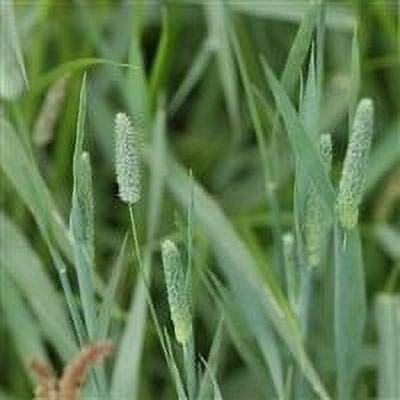
4.0(24 ratings)Dibbs Seed Timothy grass seed comes in a 5 Lbs package and is listed under color Brown in Restored Tools as sku-596757914, UPC 608887475920. The planting rate is 10 to 15 Lbs per acre. Timothy is a cool-climate, short-lived perennial bunchgrass grown mainly for hay and also used for pasture. It commonly reaches 2 to 4 feet; in Tennessee, summer drought often limits a stand to 3 to 4 years.
It is popular for horse hay, though orchardgrass and tall fescue are also used. Early settlers brought it from Europe in hay, litter, manure and ship ballast. It was observed in New Hampshire around 1711 under the name herdsgrass. The name timothy dates from 1747; the grass spread from New England into eastern Canada before 1800 and later westward.
Shallow, fibrous roots reach about 4 feet below a crown of bulb-like corms. The plant usually produces a single leafy stem of 20 to 40 inches and soft, light-green leaves 2 to 6 inches long. Each small seed has an awned, urn-shaped husk. Individual shoots may be biennial, while new shoots from older stems keep the plant perennial.
Timothy establishes readily from volunteer seed in cool, moist regions, including parts of Montana. It grows on poorly drained alluvial soil and tolerates acidity, spring flooding and waterlogged, low-lying peaty ground. It also grows on clay, silt and sand where annual rainfall exceeds 15 inches and at elevations up to 9,000 feet.
It is winterhardy, generally establishes quickly and has relatively few insect or disease problems. It can survive weeks of winter flooding but only days of flooding during the growing season. For hay, its upright growth eases harvest, and a full yield may be possible in the first production year.
Its bunching habit makes it less competitive with legumes, including alsike and red clover in alternate rows and sometimes alfalfa. Quality and protein decline quickly if it is not cut before bloom; early cutting and planting with legumes help retain protein. Nitrogen fertilizer can raise yield and protein.
Cut at full bloom, it was historically valued as horse hay for working animals because it offered high energy and low protein, rarely lodged and cured with little dust, mold or waste. In suitable pasture, it produces palatable leafy shoots, but most growth comes in early summer and tall shoots are easily overgrazed. Rotation matters, and grazing may require more area after mid-July.
Description
Description
Shipping & Returns
Shipping & Returns
Ratings and customer reviews
24 ratings
0 reviews
Ratings (24).
Share your experience
Checking your account…
No customer reviews yet. Be the first to share your experience.
Customer questions and answers
Ask about this product. Shipping, orders, and account issues belong with customer support.
Sign in or register to ask or answer.
No matching approved questions. Be the first to ask.