Crypto Commerce
Sony ZV-1 II photo and video switching checks
A tabletop session can ask one camera to do three different things in sequence: make a still photograph of an object, capture a short spoken explanation, then make another still photograph. Before choosing a camera, the useful question is what you would need to do and check between those captures. A product listing may establish that a model makes photographs and video without showing how the change between them works in the configuration you plan to use.
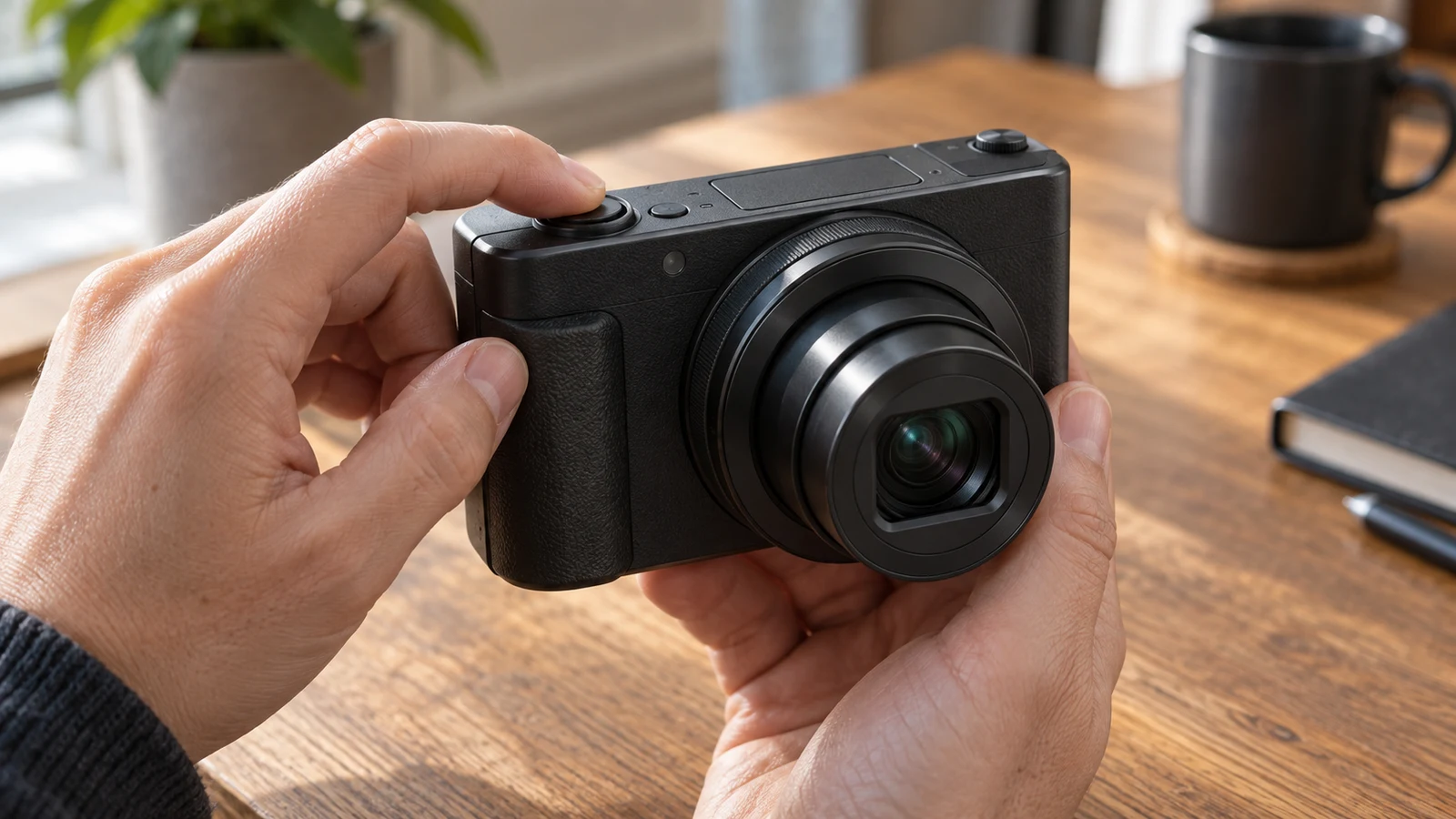
A tabletop session can ask one camera to do three different things in sequence: make a still photograph of an object, capture a short spoken explanation, then make another still photograph. Before choosing a camera, the useful question is what you would need to do and check between those captures. A product listing may establish that a model makes photographs and video without showing how the change between them works in the configuration you plan to use.
For Sony ZV-1 II photo and video switching, look for evidence of the complete trip from still to video and back. The test should tell you which actions move the camera between the two intended tasks, which choices need checking at each arrival, and which details remain unconfirmed. A photograph followed by a video proves that both can be produced; it does not, on its own, explain what happened between them.
Recording Status Checks Come After A Change Of Capture Task
First describe the session without naming camera controls. At the opening, you want a still image of an object on the table. Next, you want a spoken video explaining that object. Finally, you want another still image. The three desired captures form two transitions: still to video and video to still. Ask whether each transition can be shown with the camera prepared in a way that resembles your intended use, rather than starting a new demonstration from an unrelated state each time.
The listed white Sony ZV-1 II, model ZV1M2/W, is a candidate because its product description identifies both still photography and video. The Sony ZV-1 II photo and video switching question concerns the behavior of that exact camera during the change of tasks. Its listing does not establish the actions needed to switch, whether a choice made for one kind of capture carries over, or what the camera shows after switching. Those points call for exact-model documentation or a representative demonstration.
If you request documentation, make the request narrow: identify the ZV1M2/W model and ask where the instructions describe moving from still capture to video capture and back. A passage about making a photograph by itself will not answer what must happen next. Nor will a general description of video capability establish what the camera is prepared to do after returning to stills. Mark each answer according to its source so a documented instruction is not mistaken for something someone actually demonstrated on the camera.
A useful demonstration keeps the initial still, the spoken video and the final still in the same continuous trial of changing tasks. The demonstrator can identify the camera and the configuration used, show the transition to the second task, and then return to the third. Record the actions you can actually see, in ordinary terms, without treating them as a universal sequence for every configuration. If an action happens off camera or an initial setup is skipped, write that gap down instead of supplying a plausible step from memory.
At the first change, establish whether the camera is prepared for the intended video task before treating the transition as complete. At the return, establish whether it is prepared for the intended second photograph. You do not need a lesson in photographic settings to ask those questions. Describe the choices that matter to your own session in advance, then compare the setup shown at each destination with those choices. If the demonstration does not expose a relevant choice, the result is an unanswered question, not evidence that the choice stayed the same.
For example, the intended photograph may have its own framing requirement, while the spoken segment may need a different arrangement of the object and speaker. The point of recording that difference is to give the demonstrator a clear destination task. You are asking whether the camera is ready for the next intended capture after the change, not judging whether either finished image or recording looks good. Keeping that distinction in the request makes a short demonstration more informative.
Be careful with claims about persistence. A setting that appears unchanged in one trial may depend on a choice made before that trial; a manual may describe a different configuration from the one shown. Neither possibility should become an asserted feature of the Sony camera without the relevant evidence. Note the observed state, the documented description if one is available, and the remaining question separately. That small separation prevents an apparently smooth change from being described as proof of automatic behavior.
Recording Status Checks Are A Separate Video Question
Once the camera is prepared for the video task, you may also want to know whether recording has actually begun. That is a different inquiry from whether you reached the intended capture task. This is where recording status checks become a separate question; use the related guide to recording status checks for that distinction. This trial need only establish the move between tasks and the setup at each destination; it should not stand in for a test of how the camera signals active recording.
Keeping the two questions separate also makes a demonstration easier to interpret. If a person shows a video clip, you can acknowledge that a clip exists without inferring how they recognized its start while working. Conversely, seeing the camera prepared for video does not establish that a spoken segment has been captured. In your notes, give the transition an answer of its own and leave recording-state recognition to the separate question.
Canon G7 X Mark II Photo And Video Switching Needs Its Own Evidence
The second listed candidate is a black Canon PowerShot G7 X Mark II international-version camera bundle, model 1066C001_EDII0_4. Its description also identifies still and video capabilities. Approach Canon G7 X Mark II photo and video switching as a new inquiry, even if a Sony demonstration seemed straightforward. A different model name and product description give you no basis for transferring actions or assumptions about what happens to intended settings between captures.
Make the request to a Canon demonstrator in the same task language: an opening tabletop still, a short spoken video, and a return to a still. Ask them to identify the exact camera used and show both transitions without skipping the destination checks. If documentation is offered instead, confirm that it addresses the stated Canon model and the two directions of change. Do not treat instructions for a similar camera or a generic account of switching between photographs and video as an answer for this listing.
Identical questions need not produce identical evidence. One candidate might have an exact-model instruction you can read but no representative demonstration available; another might have a demonstration whose initial configuration was never stated. Record those limits as limits. If you cannot observe a transition, do not fill its place with an inference from the camera's ability to produce both media types. The missing part is precisely the sequence of decisions between one intended capture and the next.
The return to the final still deserves attention for both cameras. A demonstration that ends immediately after the spoken segment has only covered the first transition. Ask for the return as part of the same trial so you can see what is required before the third capture. If only the first direction is documented, keep the second direction open. That matters when the session calls for a photograph after video, regardless of how readily the camera first moves into the video task.
Canon G7 X Mark II Photo And Video Switching In Purchase Notes
The Sony ZV-1 II photo and video switching note should identify the ZV1M2/W listing, the configuration used in any demonstration, whether each transition was shown, and what you could establish about the destination setup. Write a separate Canon G7 X Mark II photo and video switching note for the 1066C001_EDII0_4 international-version listing, using the same questions while keeping its observations distinct. Where the evidence consists of documentation alone, say so. Where a demonstrator omits a relevant part, name the omission plainly.
A note can be useful without pretending every question is settled. For each transition, distinguish an observed action from a documented instruction and from an inference you still need to check. If you know the initial state only vaguely, describe it that way. If the destination setup was visible but one intended choice was not, do not turn a partial view into an assurance about that choice. Those distinctions tell you what to ask next and prevent an appealing single example from doing more work than its evidence allows.
When comparing the notes, favor the answer that addresses your actual mixed-capture sequence. The relevant comparison is whether you can establish what to do when the task changes and what to check before each next capture. It is reasonable to leave the purchase decision open if neither candidate has enough evidence for your particular sequence. You may instead decide that a remaining unknown is acceptable for your own work; make that a conscious judgment, not a supposed specification supplied by the listing.
Return to the two product listings with those separate notes before making a purchase choice. If you later consider paying with cryptocurrency, check only the payment options and terms actually presented at checkout for the order you are making. The camera-switching evidence does not establish checkout behavior, and an unobserved payment option should not influence which camera you believe will handle the still-to-video-to-still session.