Crypto Commerce
Sony ZV-1 II close-up focus checks before choosing
You want to photograph a small object so that a printed marking can be distinguished in the finished image. The listing identifies a camera, but it does not tell you whether your intended view of that marking is achievable. Before choosing the listed Sony ZV-1 II, describe the view you need, obtain close-focusing information for that exact model, and, if possible, examine a photograph made under relevant conditions. Keep any missing evidence marked as missing. A camera name alone cannot settle this particular purchase question.
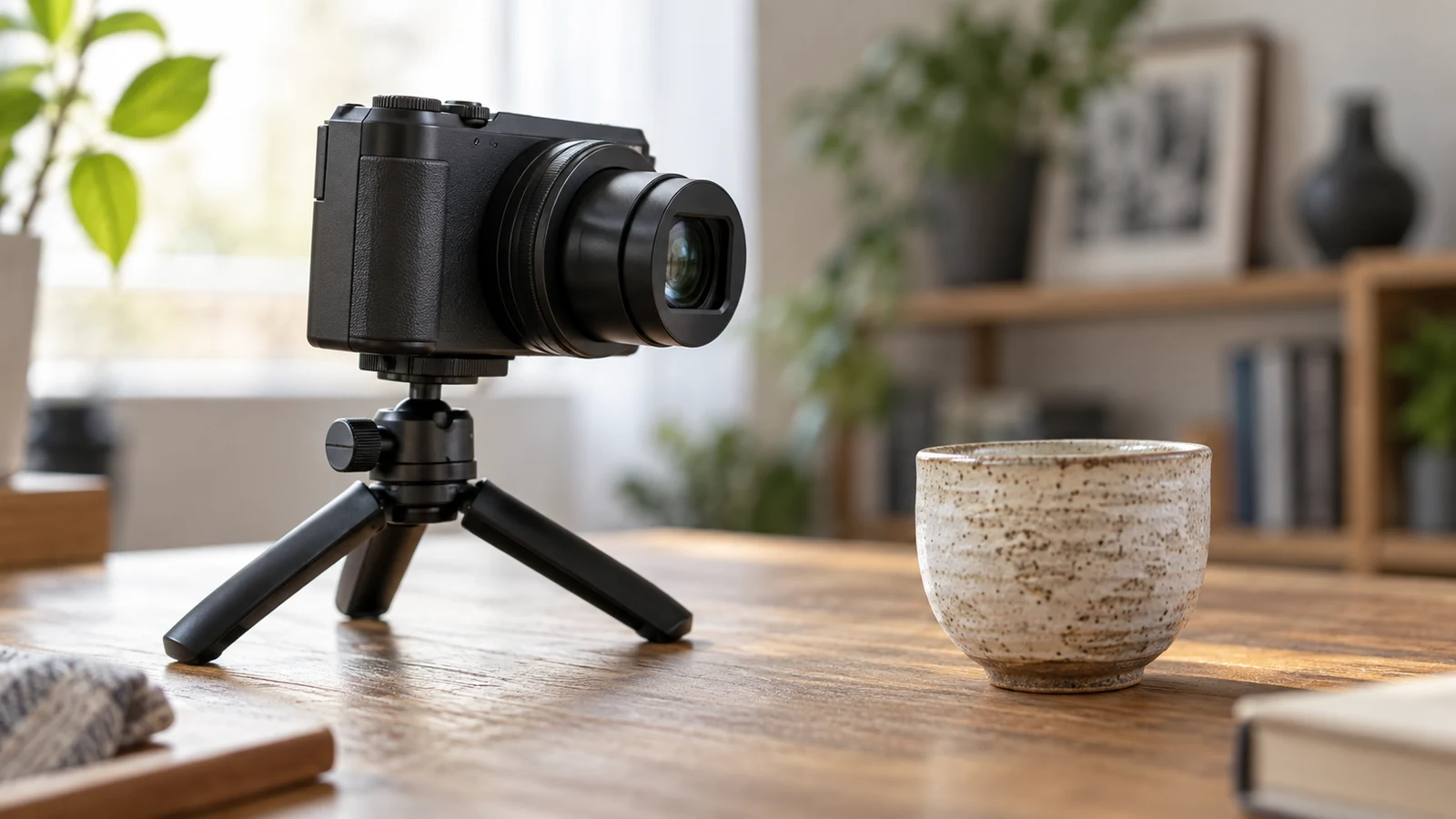
You want to photograph a small object so that a printed marking can be distinguished in the finished image. The listing identifies a camera, but it does not tell you whether your intended view of that marking is achievable. Before choosing the listed Sony ZV-1 II, describe the view you need, obtain close-focusing information for that exact model, and, if possible, examine a photograph made under relevant conditions. Keep any missing evidence marked as missing. A camera name alone cannot settle this particular purchase question.
Suppose the object is an ordinary stationary item with a short printed code. You need another person to read the code from the picture you plan to share, without already knowing what it says. That gives the inquiry a useful outcome: the marking must be distinguishable in the final photograph at the size and viewing method you actually intend. A photograph that merely includes the object does not answer the same question.
Write down the intended view before looking at camera descriptions. How much of the object needs to appear around the marking? Will the recipient see the full photograph on a screen, or only a smaller version placed in a message? If a demonstration shows a much tighter crop than you can use, the readable letters may not be relevant to your purpose. If it shows the right amount of the object but the marking cannot be distinguished, you still need to find out why before treating the model as suitable.
A useful request might be: “Could you show a photograph of a stationary object with a printed marking about as demanding as this one, with enough surrounding object visible for my intended picture?” The precise object is less important than whether the example tests the actual difficulty you care about. Avoid treating a general sample photograph or a promotional description as proof of this particular result. You are asking for evidence about one capture requirement, not a promise about every small object.
For Sony ZV-1 II close-up focus checks, distinguish two observations in any example you receive. First, does the image include the requested amount of the object? Second, is the specific printed marking distinguishable in the resulting photograph? An example can satisfy one and fail the other. Record what you can see without diagnosing a cause from the picture alone. An unclear marking does not, by itself, establish a camera's closest usable focusing position; an apparently clear sample at another framing does not establish that your framing will work.
That distinction also makes an incomplete answer easier to handle. A listing may identify the camera accurately while leaving the close-focusing conditions out. A demonstration may be offered with no indication of which model produced it. Or a sample may be too small to inspect the marking as your recipient would. Each case leaves a different question open. Ask for the missing detail rather than turning an ambiguous image into a specification.
The Sony ZV-1 II close-up focus checks link leads to a listing for a white Sony ZV-1 II compact vlog camera identified as model ZV1M2/W. Use that exact identity when asking for documentation. The supplied listing description does not provide a close-focusing limit or demonstrate readable markings at a specified framing. Its other capabilities cannot fill that gap. Ask which exact-model instructions apply to taking the still photograph you need, rather than relying on instructions for a different device or an unidentified online example.
For Sony ZV-1 II close-up focus checks based on documentation, ask what a stated distance measures from and which conditions it covers. A bare number can be hard to apply if its starting point is unspecified or its conditions differ from the way the example was made. You do not need to guess a distance from a photograph. Instead, keep the documented wording with the model identity and check whether it addresses the view you wrote down. If the documentation describes several operating circumstances, ask which one applies to the proposed demonstration. Do not assume that an unqualified figure covers every way of making a photograph.
Documentation can answer what the maker specifies, while a relevant demonstration can answer what one particular example actually shows. Neither should be stretched beyond its scope. A sample without an identified camera does not verify the listed Sony model. A specification without its stated conditions does not show that your intended marking will be readable in your finished image. If neither source answers the framing and focus question, leave the purchase requirement unresolved.
Should an authorized demonstration be possible, give the person conducting it your intended photograph in ordinary language. Describe the kind of printed marking, the amount of the object that must remain visible, and how you will judge the final image. Ask them to identify the exact camera used and to follow the applicable instructions for that model. You are requesting a result, not prescribing controls, equipment, or a technique that the supplied description does not establish.
Examine the resulting photograph at the viewing size that matters to you. Can you distinguish the actual marking while retaining your requested view of the object? If the person has supplied only a reduced preview, request an image suitable for the intended assessment if one is available. If the answer remains ambiguous, describe the ambiguity directly: “The marking appears in the frame, but I cannot distinguish its characters at the size I need.” That statement is more useful than calling the camera defective or declaring it incapable of close-up work.
Keep the evidence attached to the question it answers. A demonstration of a different marking, a different camera, or an image framed in a way you would not use can still be interesting; it simply does not settle your chosen requirement. If you change your intended photograph after viewing a sample, state the new requirement openly and evaluate it on its own terms. Otherwise you may end up saying a camera passed a test that you quietly replaced halfway through.
Canon G7 X Mark II Close-Up Checks For A Separate Candidate
The other catalog option is a Canon PowerShot G7 X Mark II international-version camera bundle, identified in its listing as model 1066C001_EDII0_4. The Canon G7 X Mark II close-up checks link identifies the product to inquire about. Its camera description contains many specifications, but none of the supplied information establishes whether your printed marking will be distinguishable at your intended framing. Treat it as a separate candidate, with its own documentation and any demonstration attributed to that exact model.
Give the Canon candidate the same task statement you gave the Sony: the kind of printed marking, the surrounding amount of object you need, and the way the finished photograph will be viewed. The requirement stays constant so that differences in evidence become apparent. The methods described in each camera's own instructions may differ. Do not transfer a condition, control name, or close-focusing figure from one model to the other merely because both are compact cameras.
A bundle listing may enumerate accessories without answering a close-focusing question. You can identify the Canon bundle and still have no task-specific evidence. Ask for the exact-model documentation that states close-focusing limits, including its measurement reference and stated conditions. If a demonstration is available, ask which camera made the photograph and whether it followed the relevant instructions. Neither a long equipment list nor an unidentified close-up sample proves that the listed Canon camera meets this requirement.
Canon G7 X Mark II Close-Up Checks When Examples Differ
Imagine that the Sony example shows the whole object but leaves the printed code unclear, while the Canon example shows the code clearly in a view too tight for your purpose. That is not a comparison with a winner. The first example fails to establish readable detail at the requested view; the second fails to establish the requested framing. Both may call for a better-matched example, and neither licenses a claim about either camera's general performance. This is why you should keep the question about the intended photograph in front of you when reviewing samples.
Now imagine one camera's exact-model documentation states a close-focusing condition and a relevant example shows your kind of marking at the intended framing. You have a stronger basis for considering that camera for this task, though the example remains one result, not a guarantee of every later photograph. If the other camera has only an unidentified sample, its suitability remains uncertain. Lack of evidence for one candidate is not proof that the other is better in every respect; it tells you which inquiry still needs work.
Written notes can keep the two inquiries honest. For each model, record the model identifier on the listing, the wording of any close-focusing documentation, the conditions attached to it, the provenance of any example, and whether that example meets both your framing and marking criteria. Leave a blank where the answer has not been supplied. This is a record of what you learned about the capture requirement, rather than a ranking based on unrelated specifications.
If a seller or another source offers to demonstrate either camera, make the request answerable without asking them to guarantee an outcome: “Can you identify the exact model used, show a stationary printed marking at this kind of framing, and provide a result I can inspect at my intended viewing size?” They may or may not be able to provide such an example. In the absence of one, exact-model documentation may still narrow the question, but do not call an undemonstrated result verified.
Buying Electronics With Crypto: Product And Checkout Checks After The Focus Inquiry
Before proceeding with a purchase inquiry, write one sentence about each camera: “Evidence supports the photograph I need,” “The supplied example does not meet the stated requirement,” or “I still do not know.” Name the evidence alongside the sentence. If the distinguishing mark is essential and the evidence remains unclear, you can wait for an answer, change the photographic requirement knowingly, or choose a candidate whose relevant performance you can establish. You do not have to convert an unanswered question into a yes.
Once the close-up requirement has been addressed, move to the separate product and purchase questions in Buying Electronics With Crypto: Product and Checkout Checks. That guide is for broader purchase evaluation; it is not evidence that either camera can make your photograph. If a cryptocurrency payment option is offered at checkout, assess the displayed terms there rather than assuming a payment method from either camera listing. Keep the capability inquiry distinct from how a purchase might be completed.
For this particular decision, your next useful message is specific: identify the Sony ZV1M2/W or the Canon 1066C001_EDII0_4, describe the stationary printed marking and required framing, and ask for exact-model close-focusing conditions or a relevant identified sample. If the reply supplies only a general camera description, repeat the unanswered question. A clear statement of what remains unknown is a sound stopping point until there is evidence for the photograph you intend to make.