Crypto Commerce
Plan Sony ZV-1 II collection photos with clear item groups
A collection photograph can contain every object and still leave a viewer unsure how many distinct objects are there. If two model buses sit partly behind a larger vehicle, the photograph may show their roofs without showing that they are separate pieces. A closer picture of the buses might solve that problem, but it can also make someone count them again as additional members. Plan the pictures around a simple question: can another person match each visible object to one intended member of the collection? For Sony ZV-1 II collection photos , verify each step.
A collection photograph can contain every object and still leave a viewer unsure how many distinct objects are there. If two model buses sit partly behind a larger vehicle, the photograph may show their roofs without showing that they are separate pieces. A closer picture of the buses might solve that problem, but it can also make someone count them again as additional members. Plan the pictures around a simple question: can another person match each visible object to one intended member of the collection? For Sony ZV-1 II collection photos, verify each step.
For a working example, imagine a collection of six model vehicles: a red bus, a blue bus, a green van, a yellow taxi, a silver coupe and a black truck. The names are temporary descriptions for this example, not claims about any actual collection. An overview establishes the arrangement; smaller group photographs help when the overview leaves identities uncertain. The owner decides what belongs in the record before arranging anything. A display stand or a decorative sign may appear in the picture without becoming a seventh vehicle.
Product Photo Shot List For Distinct Collection Members
Begin with an intended-members list written in ordinary language. For the example, record the six vehicles separately, even if two share a body shape or color. If you cannot tell two pieces apart using those short descriptions, add a distinction you can observe while arranging them, such as their positions in the display. This planning list is a statement of what the owner intends to photograph. The photograph itself still has to be checked before anyone describes it as a complete view.
Set the collection out so a viewer can follow it from one side to the other. One possible arrangement puts the red bus and blue bus on the left, the green van and yellow taxi in the center, and the silver coupe and black truck on the right. Leave a visible separation between neighboring vehicles. If a truck hides the rear of a bus, moving the bus into view is more useful for this purpose than hoping a viewer will infer its presence from a sliver of roof.
The order can be chosen to suit the actual objects. What matters is that the owner can say which member occupies each position without relying on a detail that disappears in the picture. Place two lookalike pieces where their outlines can be distinguished. If the overview is meant to include accessories, decide in advance whether each one is a member or a prop; otherwise the viewer cannot tell whether the written count includes the scenery. A photograph cannot make that membership decision for you.
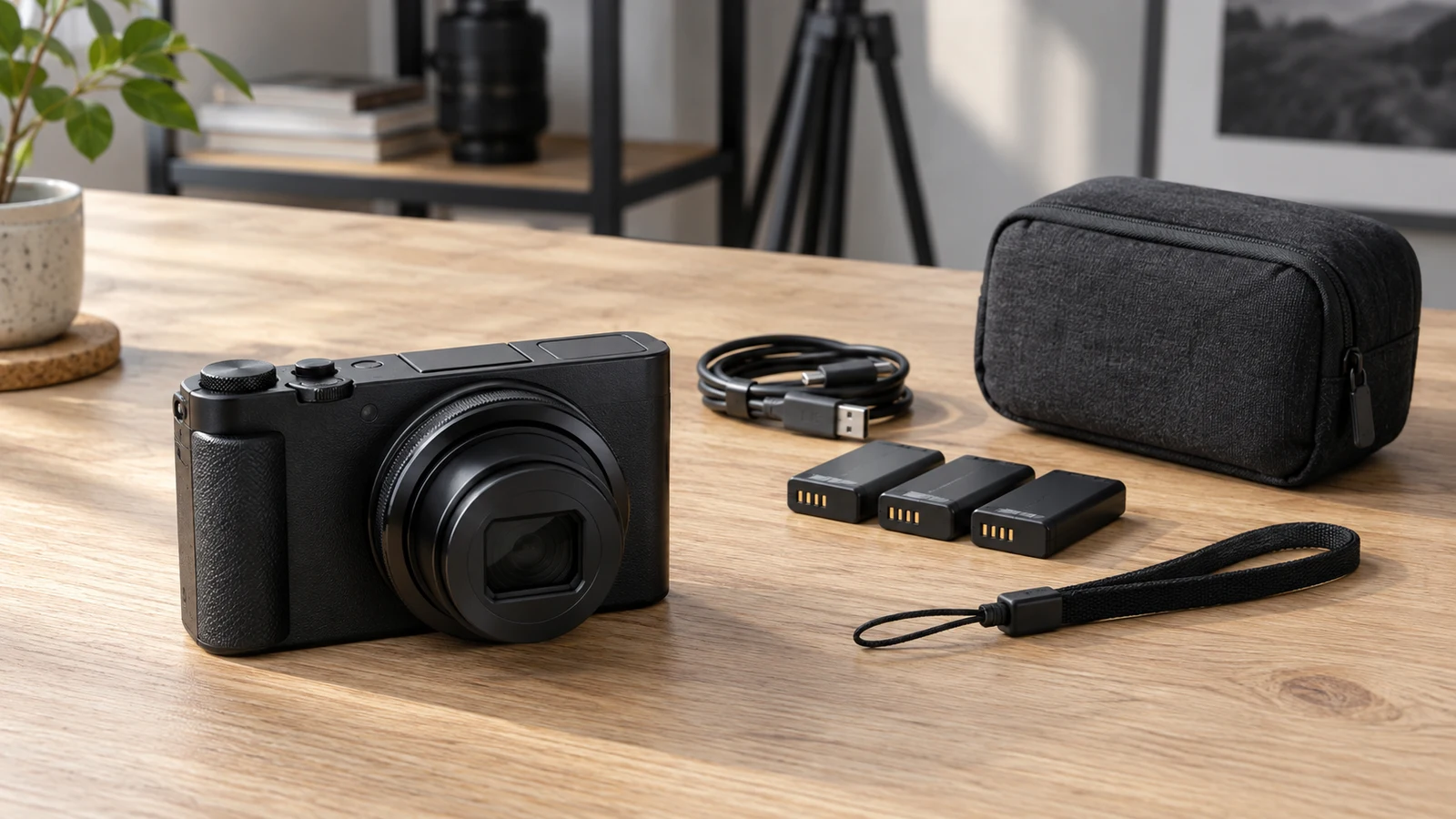
Use an overview as the reference point for Sony ZV-1 II collection photos. The linked listing identifies a white Sony ZV-1 II, model ZV1M2/W, described as a compact camera that takes still photographs. That makes it a candidate for recording the arrangement, not a guarantee that every small distinction will be readable. Look at the resulting overview and ask whether you can point to all six separate vehicles. If a position is occupied but its occupant cannot be identified, note the uncertainty instead of silently assigning a name.
A neat line is not obligatory. A display may already have shelves or clusters that the owner wants to preserve. In that case, describe membership by shelf and position within a shelf rather than forcing the objects into a new line. The point of the arrangement is traceability: someone who sees a smaller group view later should be able to find that same part of the collection in the overview. Keep a description of the chosen arrangement close to the photographs if the positions alone are not obvious.
Check the edges of the overview as carefully as its center. A vehicle placed at the margin may be cut off, while one positioned behind another may look like part of the foreground object. These are questions about the actual photograph, not about what was physically on the table. If the blue bus is present in the arrangement but invisible in the image, the image does not establish its presence. Make another overview before the arrangement changes if the record needs to show all intended members together.
Product Photo Shot List For Explainable Group Views
Smaller views are useful when an overview cannot give each member enough space to be recognized. Divide the collection along boundaries you can explain from the overview. In the example, one group might cover the two buses, van and taxi; a second might cover the van, taxi, coupe and truck. The van and taxi appear in both views on purpose. They show where one group ends and the next begins, provided that their positions and the surrounding objects still match the overview.
You may instead choose groups that do not overlap. That is simpler to count, but the transition between two tightly framed photographs may be harder to locate in the overview. Use overlap only when it helps a viewer recognize the shared boundary. If the green van looks identical to another van elsewhere in the collection, its repeated appearance alone may not prove which van the two views share. Keep enough of the neighboring arrangement visible to make that relationship plausible, and record any remaining ambiguity plainly.
Make a short description for each group in terms of the overview: “left through center” and “center through right” are more useful here than treating the group images as independent collections. The descriptions should name the intended members, not infer unseen ones. If a group view includes the edge of a fifth object, either say which object it is or avoid presenting that edge as evidence of a new member. A partial appearance is particularly easy to overcount when a viewer never sees the whole arrangement.
For Sony ZV-1 II collection photos, inspect each group image on its own and then beside the overview. On its own, does it let you distinguish the members it is supposed to clarify? Beside the overview, can you tell which region it covers? If the answer changes depending on a written label, keep the label with the set. A label can explain your intended grouping, but it cannot rescue a picture that shows only an unrecognizable fragment of an intended vehicle.
Product Photo Shot List For Repeated Appearances
The number of visible appearances is not the number of distinct vehicles. The example overview shows six intended members. The left group names four, and the right group names four; the green van and yellow taxi occur in both smaller views. Those eight group appearances still refer to six distinct vehicles. Counting every appearance across the overview and the groups would multiply the same members again. State the membership count from the intended-members list, then check whether the photographs actually support each entry.
A compact cross-reference can be written as sentences without adding anything to the photographs themselves. The red and blue buses appear in the overview and left group. The green van and yellow taxi appear in the overview and both groups. The silver coupe and black truck appear in the overview and right group. This account tells the viewer why an object reappears and where to look for a clearer view. It also reveals any member assigned to a group but absent from the resulting image.
Suppose the left group shows a bus roof behind the van. The plan may say that roof belongs to the blue bus, but the image may not be enough to distinguish it from the red bus. Mark the blue bus as unresolved in that group and make a clearer group photograph if identification matters. Do not treat a written plan as proof that the lens recorded what the owner saw while arranging the vehicles. Likewise, a vehicle can appear clearly in a group while being obscured in the overview; describe the difference rather than claiming both images show it equally well.
Keep the distinction between an appearance and a member when you share a selection rather than the full set. If someone receives only the two group views, include their relationship to the intended six-member collection and the deliberate overlap. If someone receives only the overview, do not say that the group photographs resolve a detail they cannot see. The description should match the images the recipient actually has, even when the owner retains more photographs elsewhere.
Canon PowerShot G7 X Mark II As A Separate Camera Candidate
The Canon PowerShot G7 X Mark II is a separate listed camera candidate for making the same kind of collection record. Its listing describes an international-version camera bundle. Nothing in this plan requires using two cameras together or combining their photographs. The membership test remains the same with either choice: identify each intended object in the overview, relate the smaller groups to that overview and account for repeated appearances.
Descriptions of camera features do not establish how well a particular arrangement will read in a finished photograph. The size of the objects, the way they are placed and the result you inspect all matter to this exercise. If shopping for either camera, check the exact current listing and checkout before deciding what to buy; do not infer availability, bundle contents at the time of purchase or payment terms from this photographic plan. The article offers a way to judge the images you make, not a performance comparison between the models.
Once you have the pictures, compare each actual image with the intended-members list while the physical collection is still arranged. Point to the red bus, then the blue bus, and continue through the list. Ask whether each appearance is sufficiently distinct for a reader who was not present. If the two buses merge visually, change their positions or make another group view that separates them. If an object never appears, photograph it in its appropriate group and consider whether the overview also needs to be retaken.
Write down the outcome honestly. “All six visible in overview” is justified only if you can actually distinguish all six there. “Blue bus visible in left group, unclear in overview” is a more useful note if the overview hides it. A note about uncertainty is preferable to assigning an identity from memory. If the arrangement has already been put away, leave the unresolved point in the description rather than pretending a missing picture exists.
This exercise records which objects appear together. It cannot establish who owns them, whether they are authentic or working, what they are worth or what their complete condition is. If an individual item's visible condition needs its own photographs, use the separate product photo shot list guide for that different question. A close view made for condition may show one bus very clearly while saying little about where it belongs among the six vehicles.
Here is the final plan for the fictional collection. The intended members are the red bus, blue bus, green van, yellow taxi, silver coupe and black truck. The overview aims to show each once in that order. The left group aims to show the buses, van and taxi; the right group aims to show the van, taxi, coupe and truck. The van and taxi deliberately repeat. Check each of those claims against the actual images; if the blue bus is obscured in the overview, record that unresolved point and make another overview before moving the vehicles.
For your own collection, replace those descriptions with distinctions that genuinely let you tell its members apart. Keep the membership list, the overview and the group descriptions consistent, and state where a photograph falls short. Whether you use the linked Sony listing or consider the Canon alternative, the practical question stays with the record: can someone identify each intended member and understand why an object appears more than once? Check the listings and checkout separately if a purchase is part of your plan.