Crypto Commerce
Across International DeepFreeze freezer vs HNZXIB ultra-low unit
The Across International DeepFreeze freezer deserves consideration when a laboratory needs a listed -40°C upright with USB data export and several alarm functions. The HNZXIB DW-86W20 has a stated temperature range extending to -86°C, making it a different candidate for a different storage requirement. Start with the temperature conditions required for your actual materials. Neither a colder advertised endpoint nor a longer feature list establishes suitability for a particular specimen or laboratory procedure.
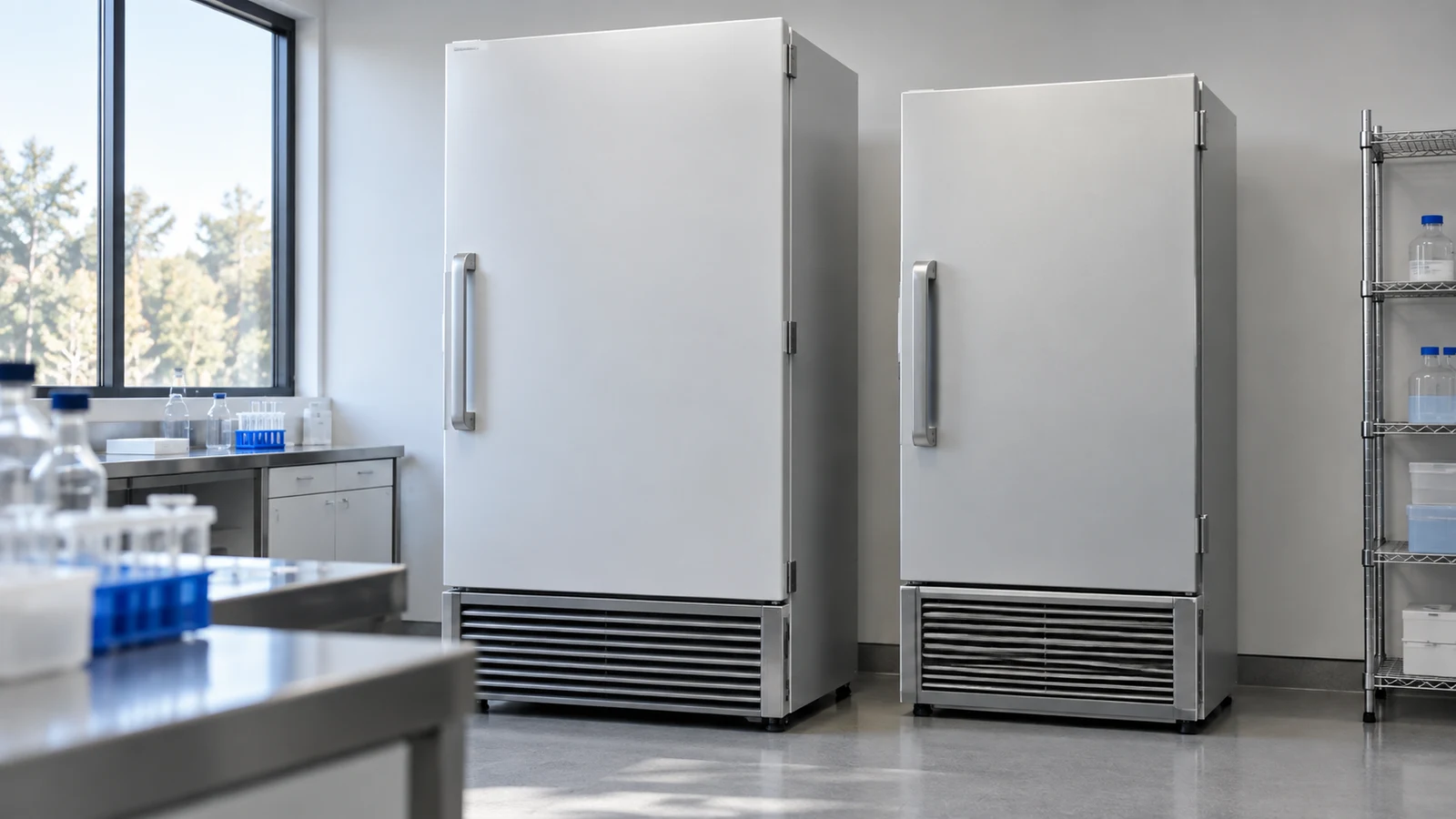
The Across International DeepFreeze freezer deserves consideration when a laboratory needs a listed -40°C upright with USB data export and several alarm functions. The HNZXIB DW-86W20 has a stated temperature range extending to -86°C, making it a different candidate for a different storage requirement. Start with the temperature conditions required for your actual materials. Neither a colder advertised endpoint nor a longer feature list establishes suitability for a particular specimen or laboratory procedure.
The purchasing question is whether the laboratory needs the D16.110's stated combination of storage volume and monitoring features, or whether its work requires investigating the HNZXIB's lower temperature range. These descriptions support an initial comparison. They do not provide independently validated temperature performance, specimen suitability or compatibility with your monitoring arrangements. Separate those unresolved questions from the features each description explicitly names.
A useful selection record should identify the intended materials, their documented storage requirements and the laboratory's acceptance criteria. Give the person responsible for those materials a chance to review the equipment choice before procurement. If the temperature requirement remains unsettled, a comparison of cabinet features cannot resolve it.
HNZXIB Freezer Alternative: Establish The Exact Models
The primary product is the Across International D16.110, identified as sku-2241462786 and UPC 850566007988. Its description specifies a 16 cu ft upright medical freezer, -40°C and 110V. Use these identifiers when reviewing the Across International DeepFreeze freezer, requesting documentation or checking a quotation. A response about another DeepFreeze model would leave this comparison unresolved, even if the cabinet looked similar.
Included accessories need their own confirmation. The Across description names built-in functions, but it does not give a complete packing list of racks, storage boxes, communication cables or software. Ask which items accompany the exact configuration being quoted and which require a separate purchase. Keep accessory availability distinct from whether the freezer itself has a particular port or function.
The comparator's description identifies model DW-86W20. The product title calls it a 20L laboratory freezer, while the description supplies internal dimensions without explicitly stating a capacity in liters. Treat that title-level capacity as something to reconcile with model documentation. The HNZXIB freezer alternative should be assessed as this specific model, with its own stated features and unanswered questions.
For the HNZXIB, the description lists a wooden box package. That establishes the stated packaging format, not a complete accessory inventory or a delivery service. Request an itemized contents list if your intended setup depends on storage fittings or external monitoring equipment. Neither product description provides enough information to assume the laboratory will receive everything needed for its intended workflow.
HNZXIB Freezer Alternative: Temperature Requirements Come First
The Across description gives -40°C as its temperature specification. It does not supply a full adjustable operating range, accuracy tolerance or temperature uniformity data. HNZXIB states a range of -40°C to -86°C, but its description also leaves accuracy and uniformity unresolved. The figures establish a stated difference in temperature capability; they do not demonstrate how either unit performs throughout a loaded chamber.
If a storage procedure requires conditions colder than the Across unit's stated specification, the supplied description does not support selecting it for that procedure. HNZXIB's stated range gives a reason to investigate that model further. It still needs assessment against the required operating conditions. Conversely, when a procedure calls for -40°C, a lower endpoint alone does not answer whether the comparator is the better purchase.
The Across description names vaccines, DNA, RNA, virus samples, organs and serum as intended storage materials. Read that as a vendor-stated intended-use list. It does not establish suitability for every preparation within those categories or replace the storage instructions applicable to a particular material. Avoid using a broad specimen label as the acceptance criterion for the purchase.
For example, a laboratory considering one freezer for several collections should first establish whether their documented storage requirements agree. If they differ, ask the responsible laboratory staff how those differences affect equipment selection. Neither description establishes separate independently controlled temperature zones. Do not plan around that capability without model-specific confirmation.
Request temperature performance information that corresponds to the intended setpoint and use conditions. Useful questions include how performance was assessed, what loading conditions applied and whether the evidence covers the exact model. Any qualification or acceptance work should follow the laboratory's procedures. This comparison does not establish a safe storage protocol or certify either freezer for sensitive materials.
Compare Refrigerator Compartment Capacity Beyond The Total: Laboratory Storage Fit
The Across unit's stated 16 cu ft capacity describes its listed volume, but the supplied description does not give internal dimensions or a rack layout. HNZXIB lists an inner size of 327 × 200 × 305 mm. Those measurements give a starting point for checking container fit, although their orientation and any fittings that restrict access still need confirmation. Avoid converting either description into an assumed number of specimen boxes.
Prepare a storage list using the actual containers the laboratory expects to use. Include their outside dimensions and any holders that remain around them during storage. Ask for a model-specific layout showing where those containers would sit and how staff would retrieve them. A drawing that identifies the proposed fittings is more useful for this decision than a claim that a cabinet can accommodate laboratory samples generally.
For separate refrigerator shopping, Compare refrigerator compartment capacity beyond the total addresses a related appliance question. Here, keep the freezer assessment tied to the laboratory's containers and storage requirements. Household compartment comparisons cannot establish a laboratory freezer's specimen capacity, temperature performance or suitability for the intended materials.
Access deserves a practical review alongside fit. Ask whether the proposed arrangement lets staff remove the needed container without disturbing unrelated stock, and how the supplier expects any supplied fittings to be used. These are questions for the proposed configuration, not established advantages of either model. The descriptions do not document retrieval arrangements or provide enough detail to compare them.
HNZXIB Freezer Alternative: Alarms, Records And Power Loss
The Across International DeepFreeze freezer description lists high and low temperature, power failure, open door and clogged filter alarms. It also names password protection, a built-in remote alarm, an RS-485 port, and USB data export and storage. That combination warrants closer investigation when the laboratory needs records and notification functions, but each feature has a narrower meaning than a complete monitoring system.
USB export does not, by itself, explain what information is recorded. Ask for a representative export and documentation of its fields, timestamps and recording intervals. Establish how records are retained and retrieved, and whether the exported information meets the laboratory's requirements. The description does not establish an audit trail, a particular file format or compatibility with a records platform.
The RS-485 port also needs a specific compatibility discussion. Ask for the communication documentation and have the person responsible for the laboratory's monitoring system assess it. A named port does not establish that an existing system can read the freezer's data. Likewise, the phrase built-in remote alarm does not specify phone notifications, email delivery or a ready connection to your existing alarm arrangements.
Across lists a 48-hour controller battery backup. The word controller matters: the description does not establish 48 hours of refrigeration during a power outage. Ask exactly which controller functions remain available and under what conditions the stated duration applies. Keep the laboratory's power-loss response plan separate from this feature until the relevant functions have been confirmed.
HNZXIB explicitly lists a digital temperature display, high and low temperature alarms, and sensor fault alarms. Its description does not establish USB export, remote notification or controller backup. That absence is an information gap rather than proof that every such capability is unavailable. If one is necessary, obtain an explicit answer for the DW-86W20 before treating it as an equivalent substitute.
Choose monitoring requirements by following the laboratory's intended response. Identify who needs to notice an event, what information they need and which record must remain afterward. Then assess each freezer against those requirements. A local display, an alarm and an exported record answer different questions, so a single checkmark labeled monitoring would conceal important differences between the descriptions.
HNZXIB Freezer Alternative: Installation And Purchase Conditions
The Across description states 110V, instructs users to leave the unit unplugged for 24 hours before first turning it on, and says it is not designed for a mobile platform. Preserve those limitations in the installation discussion. Ask for the exact model's installation instructions, required clearances and electrical requirements before deciding where it will operate. Do not infer suitability for mobile use from cabinet appearance or proposed mounting arrangements.
HNZXIB lists 110V 60HZ, input power of 270W and external dimensions of 780 × 410 × 515 mm. It also identifies manual defrost. These are useful planning details, but they do not establish plug compatibility, installation clearances or a defrost schedule. Ask how the manufacturer's instructions would fit the proposed location and the laboratory's procedures for managing stored materials during maintenance.
The descriptions do not support a measured energy-cost comparison. HNZXIB uses promotional language about efficiency and lower energy consumption, but no comparable operating test for the two models is supplied. Its input power figure alone does not establish daily consumption. Across's description provides no matching input-power figure here. Request comparable data if energy use could change the purchase decision.
Maintenance questions should remain specific to the equipment. Across names a clogged filter alarm, but its description does not set out a filter servicing procedure. HNZXIB's manual-defrost specification does not explain how often defrosting will be needed in your use. Obtain the relevant instructions and ask who will carry out the work. Avoid building an operating schedule from assumptions about other freezers.
Commercial terms require a separate review of the current offer. Confirm the exact model on the quotation, the complete purchase amount and which delivery or installation services, if any, are included. Ask how service support and any applicable warranty would be handled. Product features cannot establish return eligibility, delivery timing or the remedy available if the equipment does not meet the agreed specification.
If choosing a crypto payment option, review the asset and network actually offered for that transaction, along with the requested amount and any displayed fee or deadline information. This guide does not establish current checkout behavior or refund conditions. Keep that payment review brief and separate from equipment approval so an unresolved storage requirement is not overlooked while arranging payment.
Advance the Across D16.110 for further assessment when its stated -40°C specification, upright volume and listed data functions match the laboratory's documented needs. Investigate the HNZXIB DW-86W20 when the required temperature range points toward its stated lower endpoint, while resolving capacity and monitoring questions independently. Before requesting a final quotation, give the supplier a written specification covering the intended setpoint, container arrangement and required alarm or record functions, and ask for a response tied to the exact model.